Volume IX
Before the iPhone: The Newton Years
Apple spent the 1990s trying to build a computer you held in your hand, wrote on, and carried everywhere. They got the concept right. The technology wasn't ready. This is the story of the decade that had to fail so the iPhone could succeed.
A Computer You Could Hold
The Narrative
The premise was audacious: a personal computer with no keyboard, no mouse, and no desk. John Sculley called it the "Knowledge Navigator." What shipped was rougher than the dream — handwriting recognition that famously struggled, a stylus that felt like the future and the past at once — but the idea underneath was profound. Apple had decided that the next computer wouldn't sit on a desk.
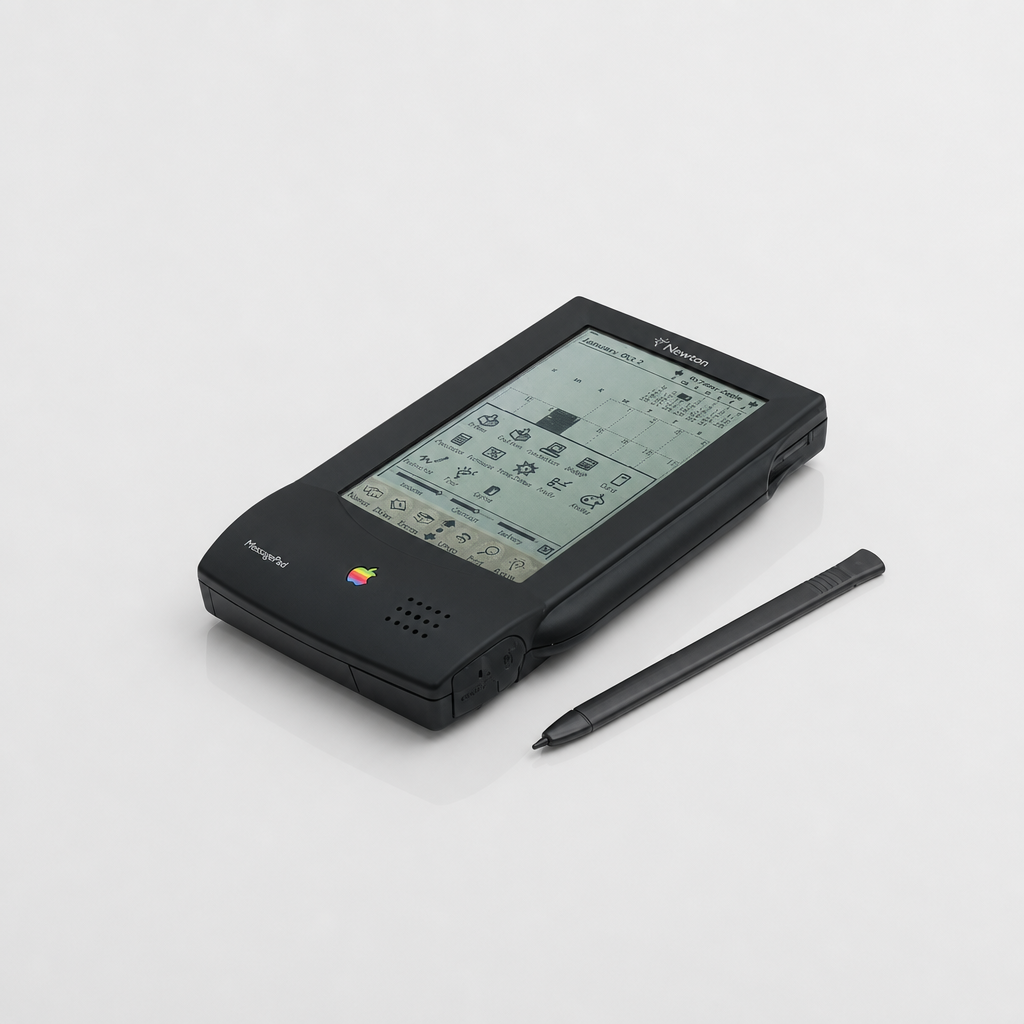
Newton Messagepad Original
RareApple • 1993
The first one. Running a 20 MHz ARM 610 chip, it was the first consumer device to ship with an ARM processor — the same architecture that would eventually power every iPhone and Apple Silicon Mac. The handwriting recognition was uneven, the price was $700, and the battery life was measured in hours. None of that diminished what it was trying to be.
Getting It Wrong, Then Less Wrong
The Doonesbury strips landed in 1993 and the jokes never quite stopped. But quietly, each revision made Newton more livable. The 110 shrank it into something you could actually slip into a bag. The 130 added a backlit screen and better software. A small, passionate community formed around these imperfect machines — people who used them seriously, who defended them fiercely, and who were onto something real even when the hardware wasn't quite there.
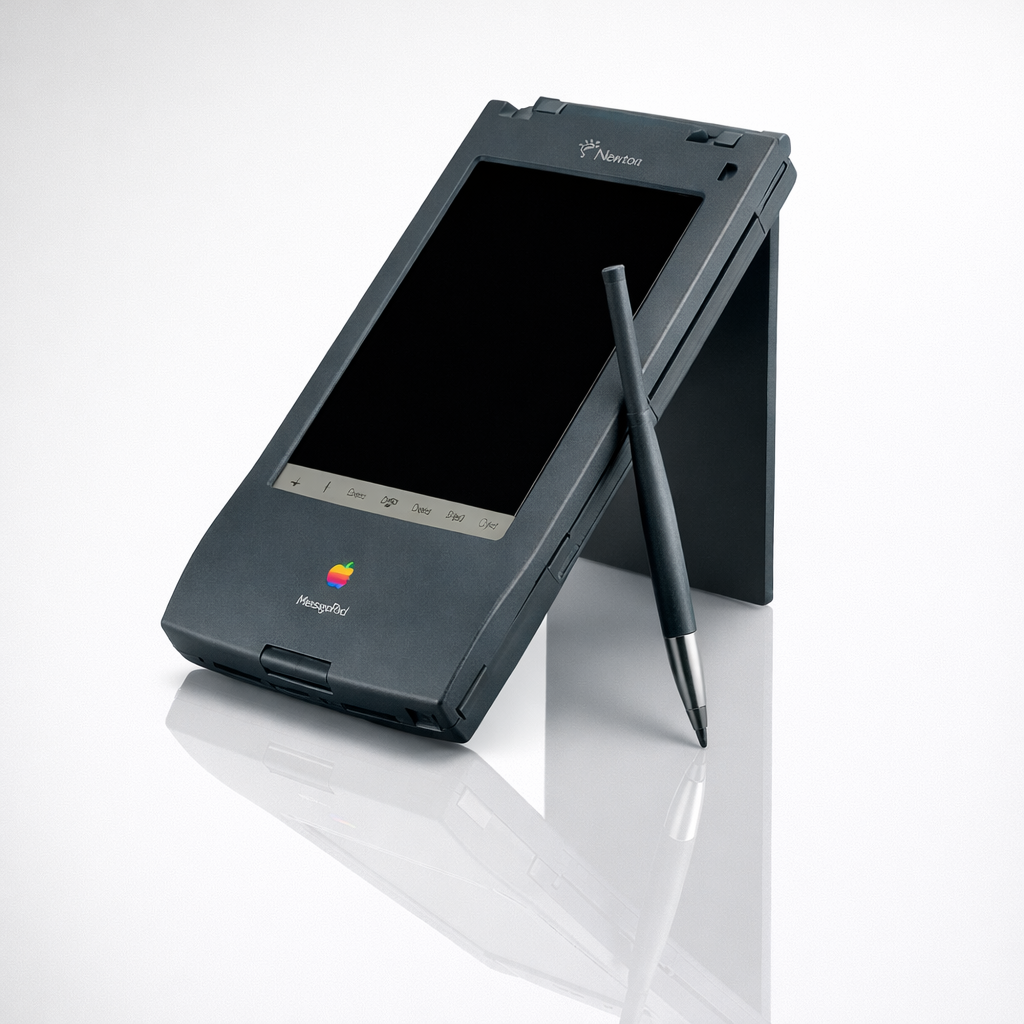
Newton Messagepad 110
UncommonApple • 1994
Released six months after the original, the 110 was Apple's first revision. Slightly smaller, slightly lighter. The handwriting recognition was unchanged — still the butt of the joke — but the form factor started to feel like something you'd actually carry. The cult was forming.
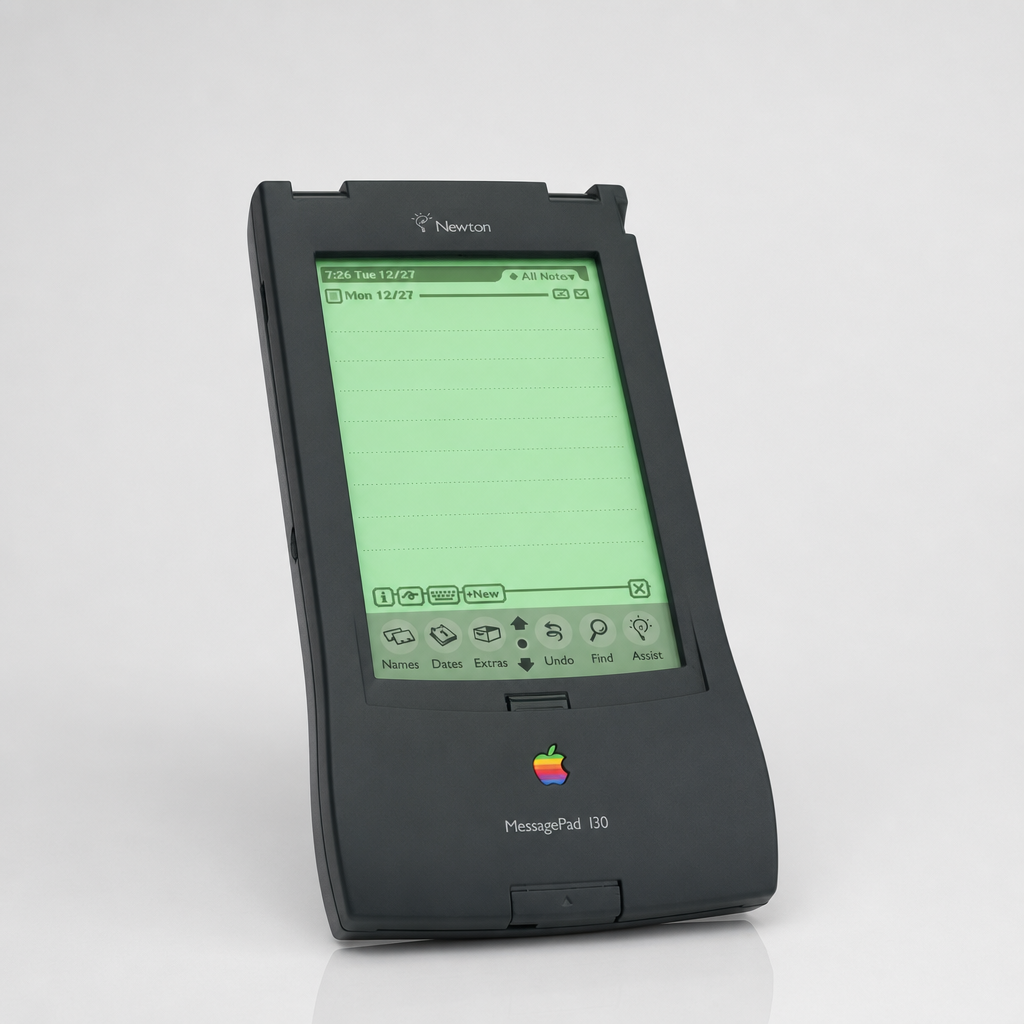
Newton Messagepad 130
UncommonApple • 1996
The backlit screen was the 130's headline feature, but the more meaningful improvement was under the hood: a better version of the Newton Intelligence handwriting engine and expanded memory. By 1996, Newton was genuinely usable for the people who committed to learning it.
The Right Shape for School
The Narrative
In 1997, Apple found Newton's most convincing form: a clamshell with a real keyboard, built tough, and priced for classrooms. The eMate was aimed at students, and it worked — durable enough for backpacks, cheap enough for schools, and immediately recognizable as something new. It was a preview of ideas that would take another decade to return as the iPad. Apple had figured out what the device should be. Then they canceled it anyway.
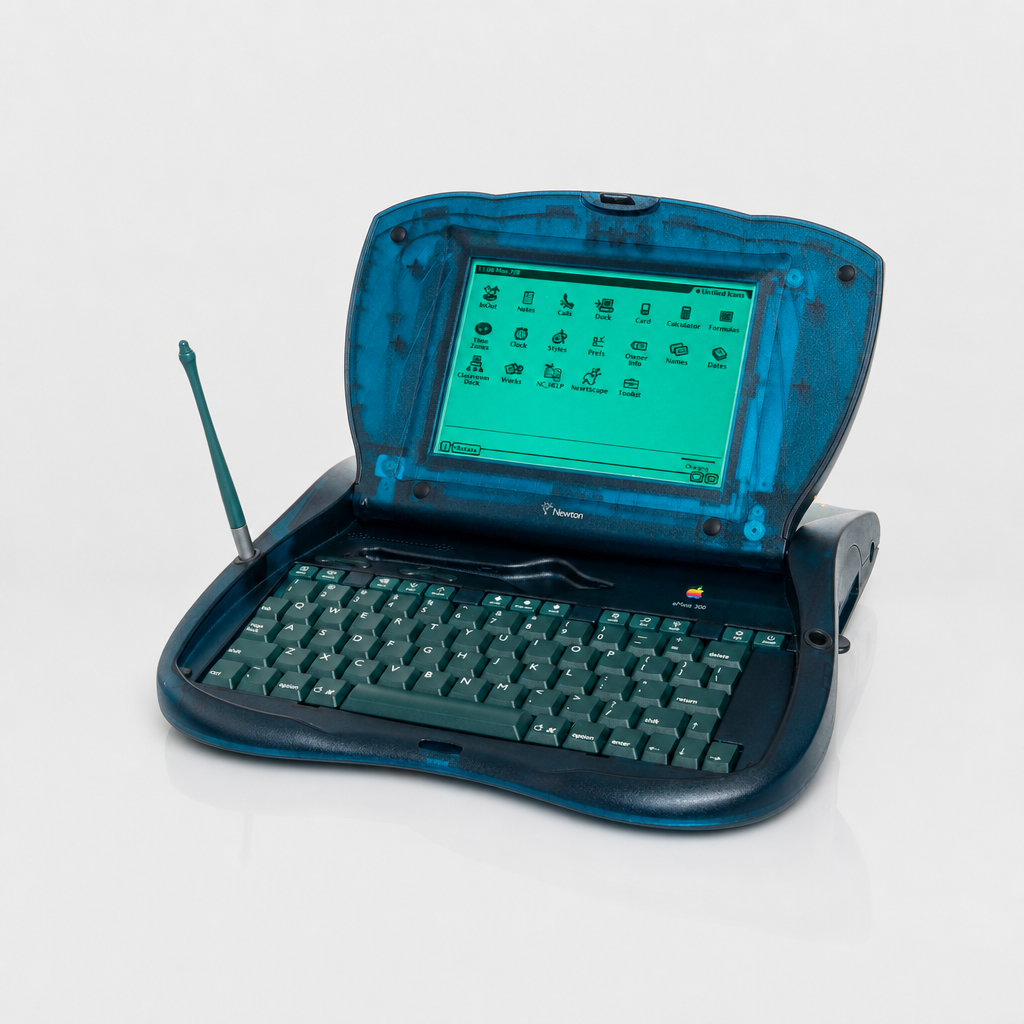
Newton eMate 300
UncommonApple • 1997
The eMate ran Newton OS 2.1 on a 25 MHz ARM 710a and cost $800 at launch — half the price of a comparable laptop. The translucent green casing predated the iMac G3's candy-color moment by a year. If the eMate had survived, it would have been the first serious attempt at a dedicated student computer. It was discontinued in February 1998 alongside the rest of the Newton line.
Peak Newton, Wrong Year
The MessagePad 2000 was, by nearly every measure, excellent. Handwriting recognition that actually worked — not grudgingly, but reliably. A 162 MHz StrongARM processor that made previous Newtons feel slow. Wireless connectivity. An expansion bay. It launched in 1997, the same year Steve Jobs returned to Apple as interim CEO. Newton was canceled in February 1998. The best version of the product never got its moment.
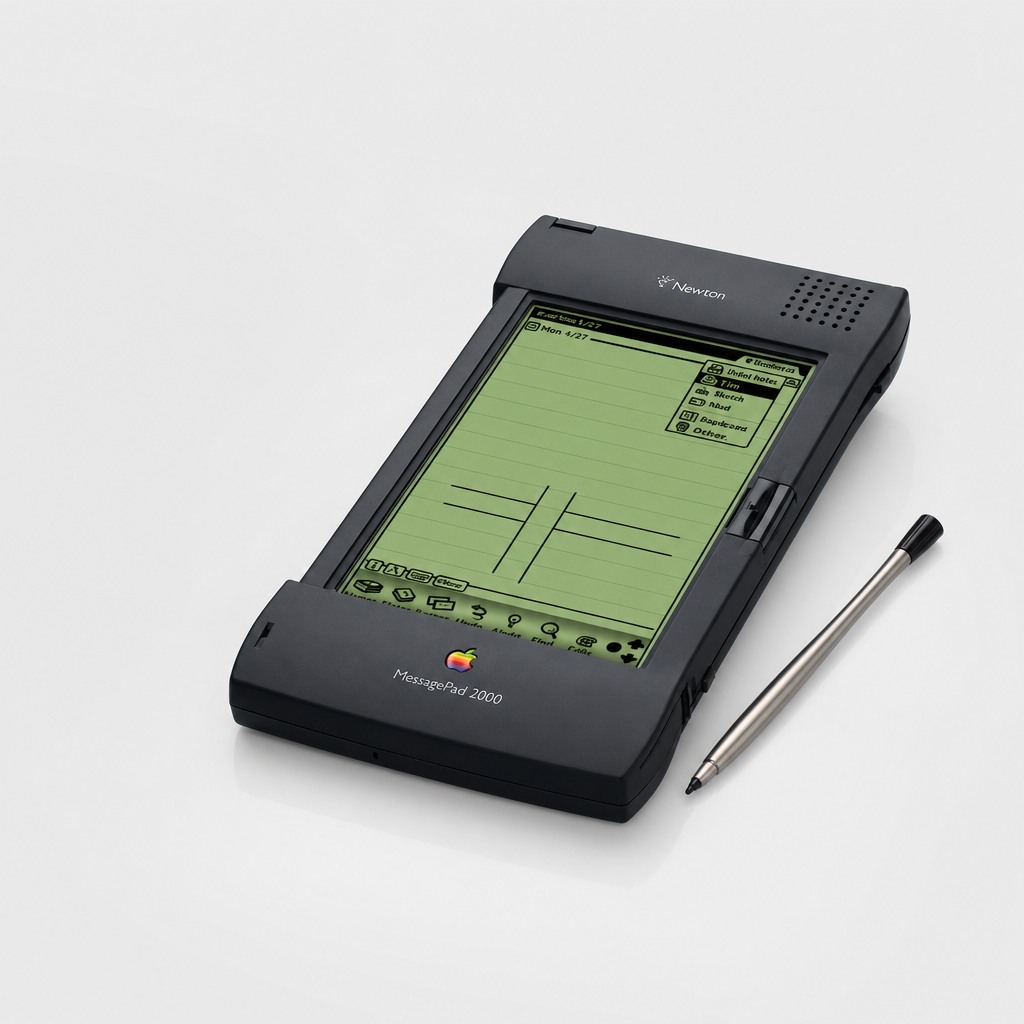
Newton Messagepad 2000
RareApple • 1997
This is the Newton that answered every reasonable criticism of the line. Fast, capable, genuinely useful handwriting recognition via the Calligrapher engine. The MP 2000 attracted serious professional users — doctors, lawyers, field workers — who built workflows around it. When Apple killed it, those users were furious. Some kept using their units into the 2010s. A few still do.
The Proof
The Narrative
Jobs said Newton failed because styluses were wrong. He wasn't wrong. But in canceling Newton he didn't abandon the idea — he held it for nine years, until the technology caught up. The iPhone launched in 2007 with a touch screen, no stylus, no keyboard, and the same core premise Newton had carried for a decade: a computer personal enough to live in your pocket. Newton's concept had been right all along. The world just needed fourteen more years of silicon to get there.
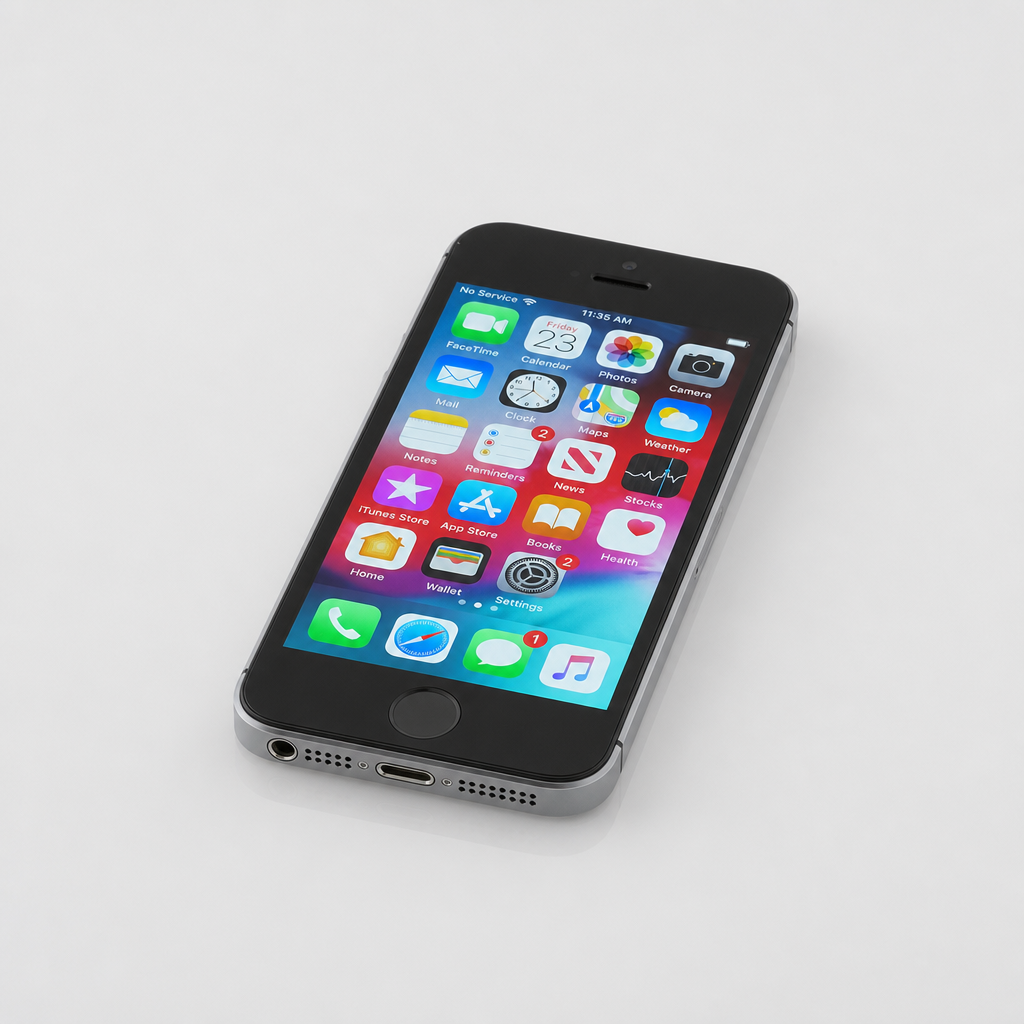
iPhone SE
CommonApple • 2016
The original SE was Apple's argument that the best smartphone didn't have to be the biggest one. It ran the same A9 chip as the iPhone 6S in a body the size of the iPhone 5. As a Newton bookend, it's fitting: Newton's promise was that computing could be small, personal, and always with you. The iPhone SE, more than any other model, insists on that same idea. Pocket-sized still matters.