Preserving the Bits That Built Apple
In 1988, a Macintosh SE FDHD changed everything. What started as fascination - Memphis BBSes, learning what a computer could do - became a career in software. During the pandemic I started tracking down the machines I'd had, then the ones I'd always wanted. Six years later the collection overflows. But what surprised me most is what I love: not the machines running, but the moment they start running again.
It started with a NeXTStation bought back in 1998. It's all been downhill from there.
Mostly Apple, mostly working. A lot of these came in dead or unknown status, needing cleaning, recapped logic and/or logic boards, sometimes bodge wires to fix damage from leaking PRAM batteries, or stealing parts from machines that were too far gone to save. The goal is always the same: get it running and keep it that way.
Before the iPhone: The Newton Years
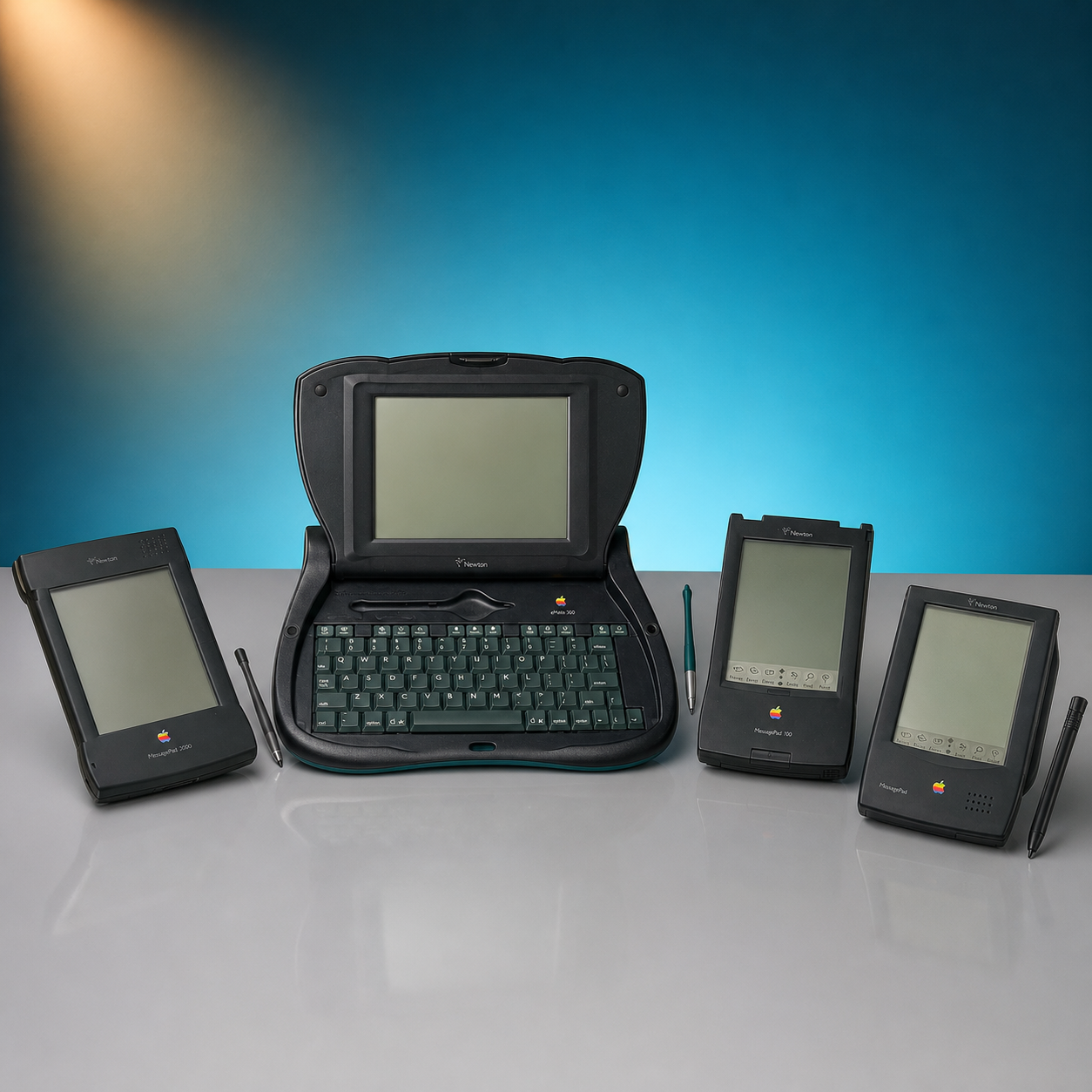
Apple spent the 1990s trying to build a computer you held in your hand, wrote on, and carried everywhere. They got the concept right. The technology wasn't ready. This is the story of the decade that had to fail so the iPhone could succeed.
“Simple can be harder than complex. You have to work hard to get your thinking clean to make it simple.”
— Steve Jobs, BusinessWeek, 1998“The system should treat all user input as sacred.”
— Jef Raskin, The Humane Interface, 2000Featured Artifacts
 Rare
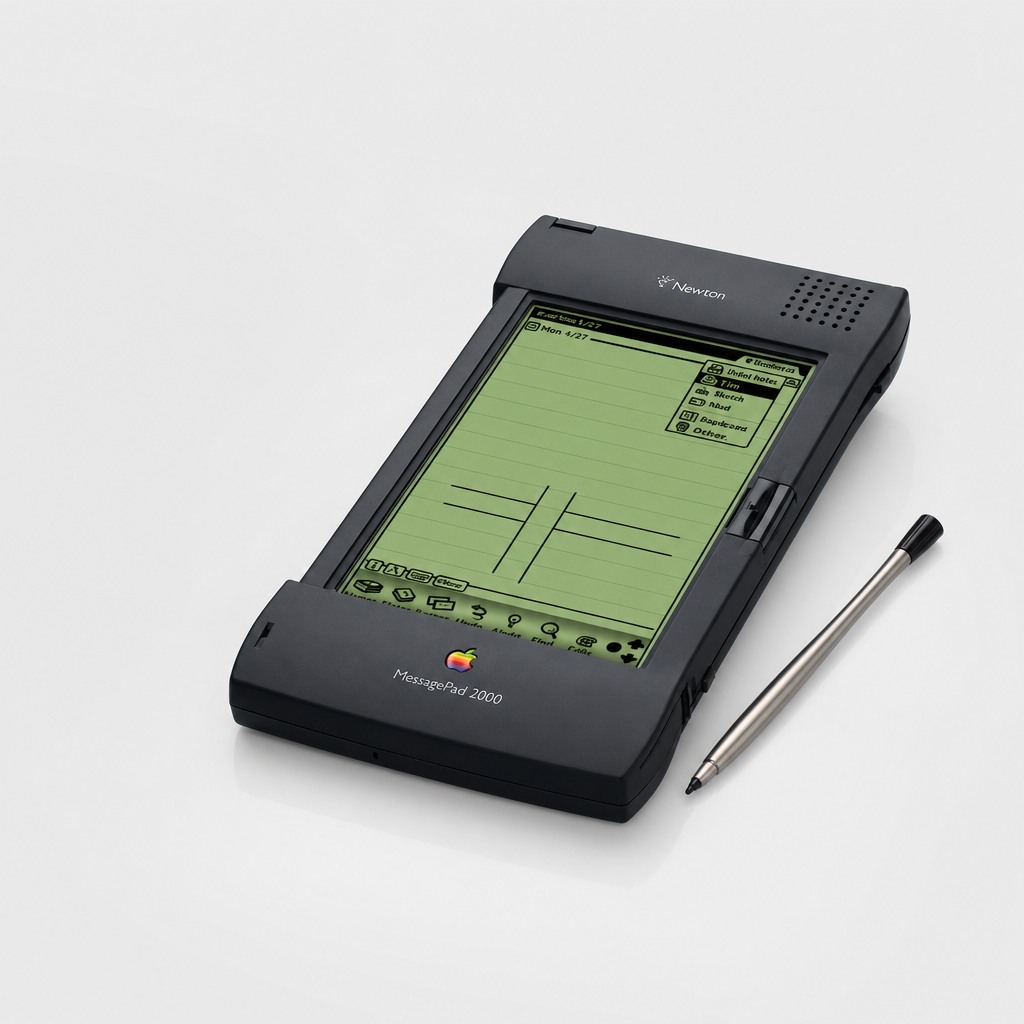
RareNewton Messagepad 2000
1997 · Apple
This is the Newton that answered every reasonable criticism of the line. Fast, capable, genuinely useful handwriting recognition via the Calligrapher engine. The MP 2000 attracted serious professional users — doctors, lawyers, field workers — who built workflows around it. When Apple killed it, those users were furious. Some kept using their units into the 2010s. A few still do.
 Rare
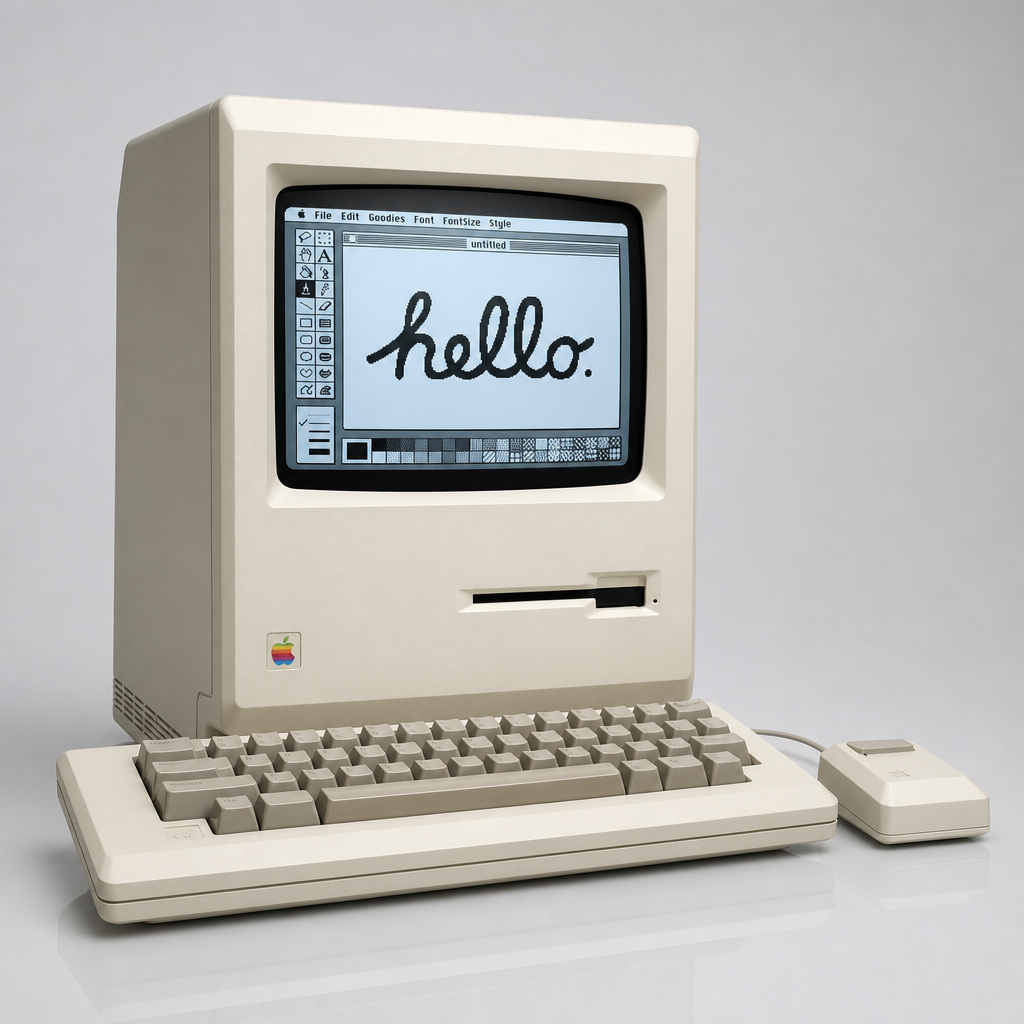
RareMac 128k
1984 · Apple
The original. Thirty seconds of startup, a single floppy drive, and 128 kilobytes of RAM shared between the OS and every application. It changed everything despite being not quite enough.
 Very Rare
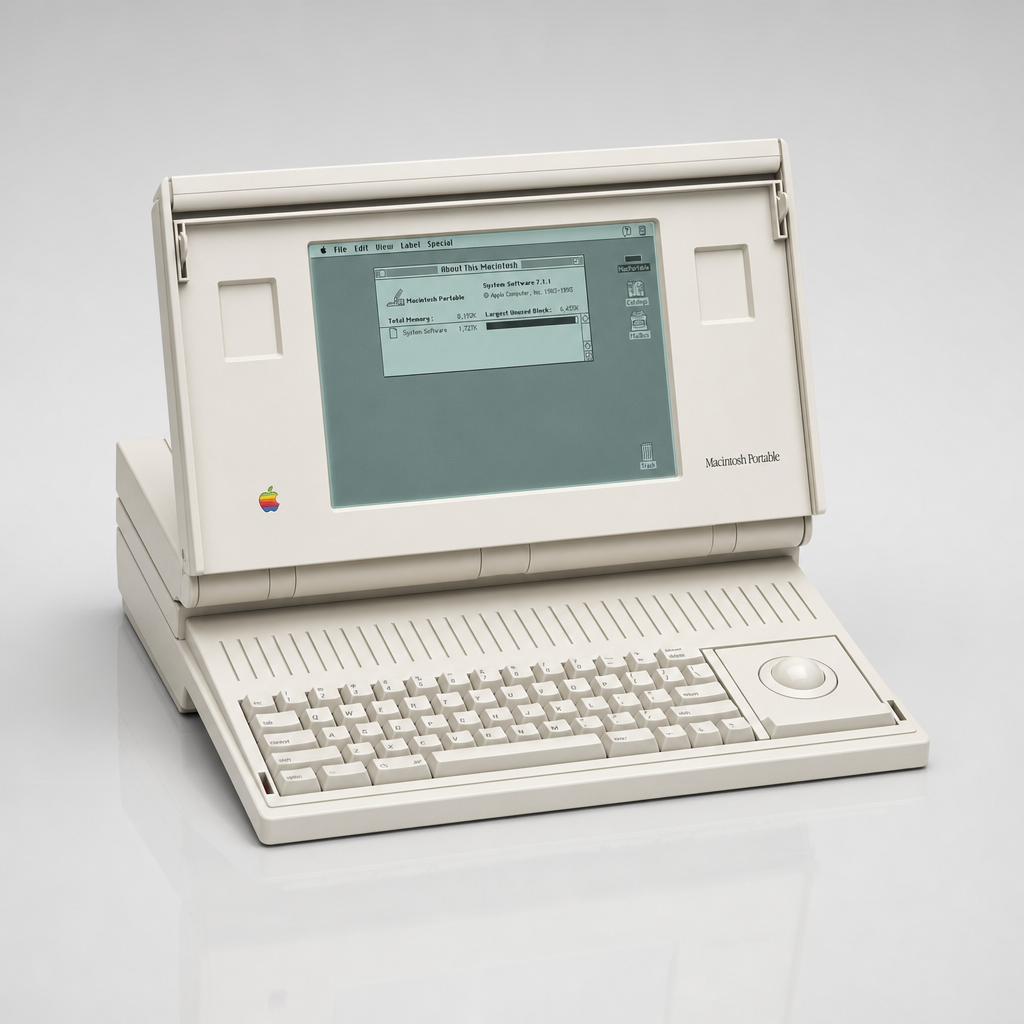
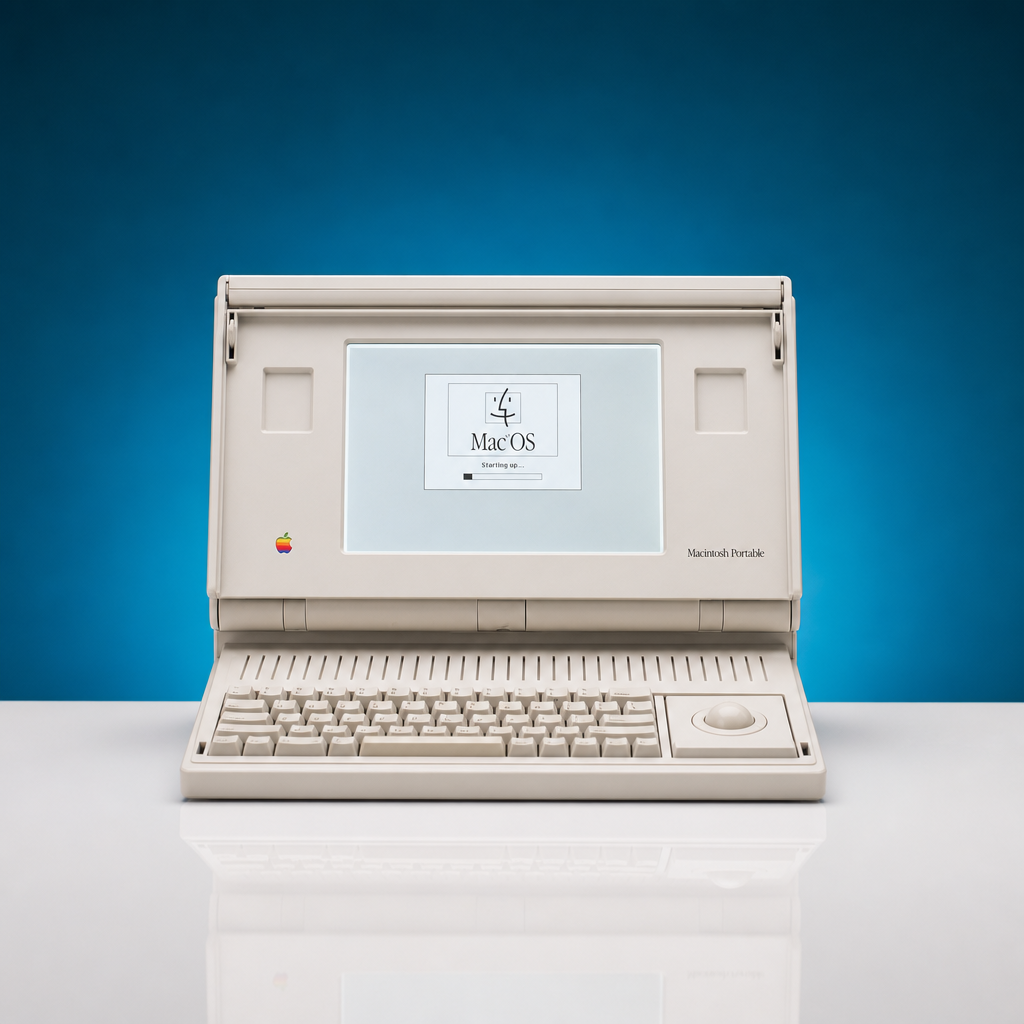
Macintosh Portable
1989 · Apple
The one that started it all — and nearly ended it. An active-matrix display, a full-travel keyboard, and a price tag of $5,800. Too expensive, too heavy, and too soon. But every laptop Apple ever shipped owes something to this machine. This unit has had its backlight upgraded so the screen finally looks the way the engineers wanted.
 Uncommon
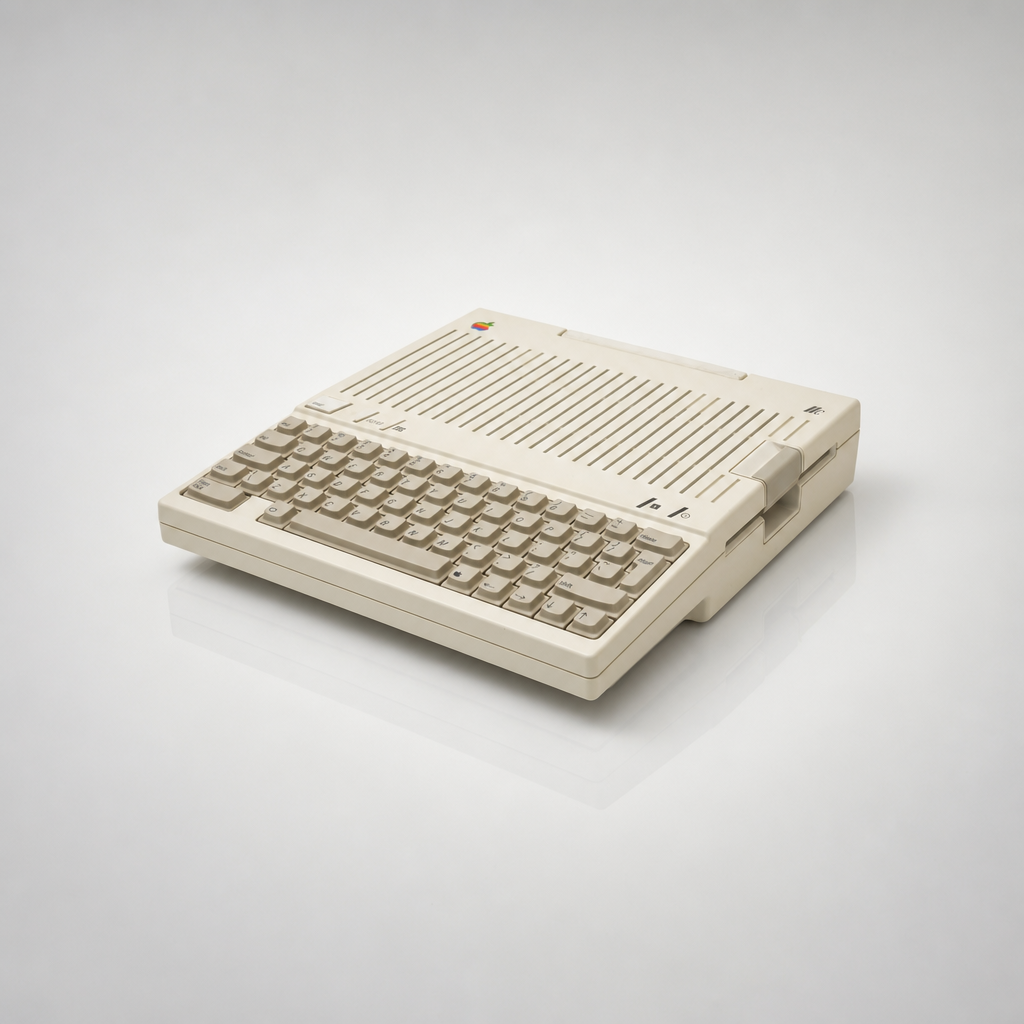
Apple IIc
1984 · Apple
Apple's first real attempt at a portable computer. The handle on the back wasn't a gimmick — it genuinely invited you to pick it up. A 5.25" drive, 128K of RAM, and Frog Design's snow-white wedge defined the form language Apple would chase for the next decade.
 Uncommon
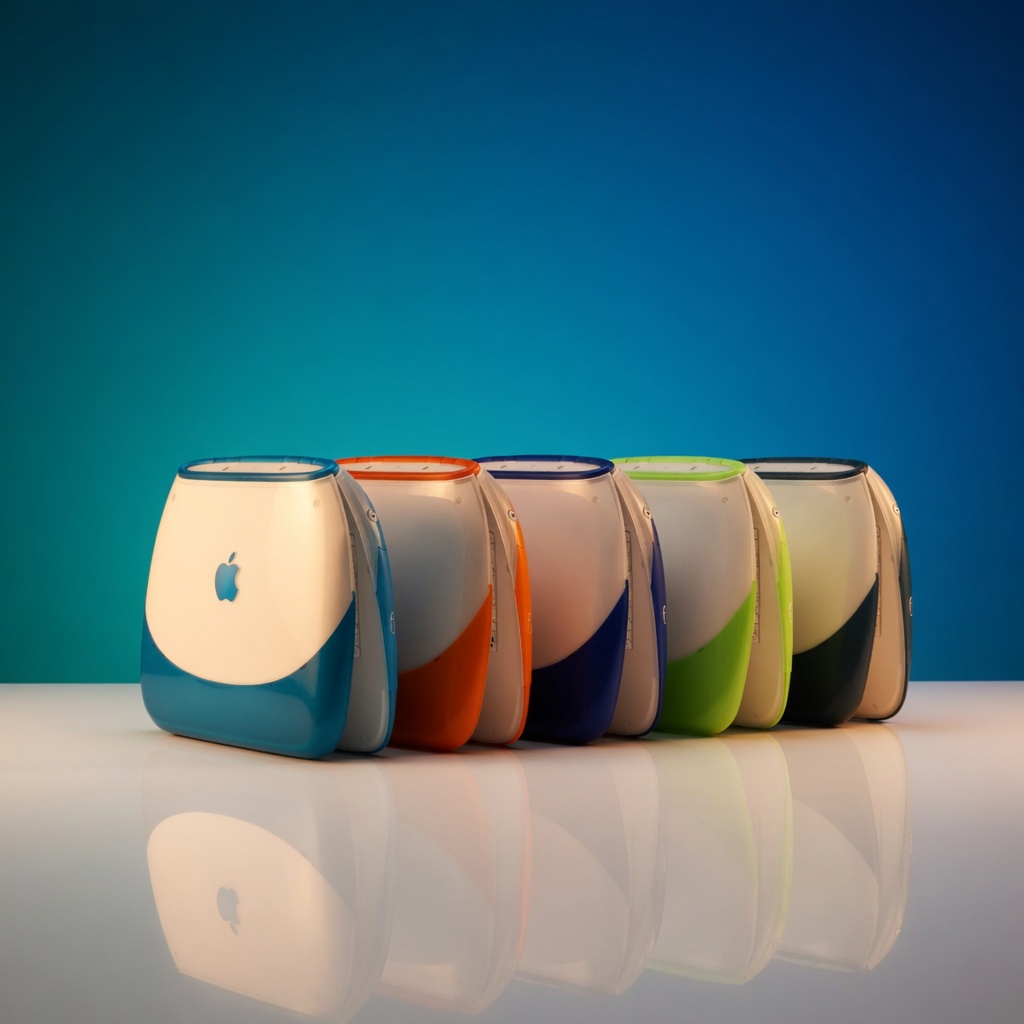
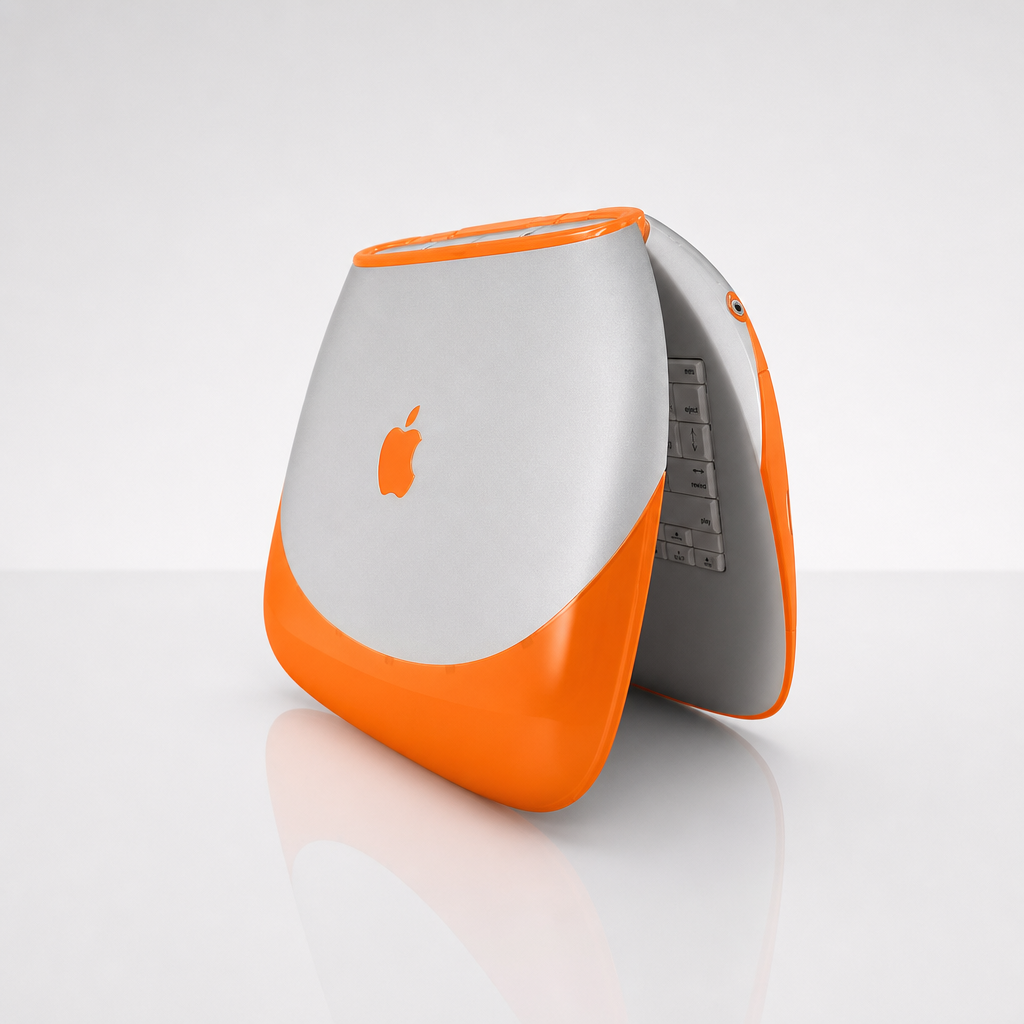
iBook G3
1999 · Apple
Tangerine. A 300 MHz G3, a handle built into the hinge, and polycarbonate shells in flavors Apple was still willing to name after fruit. The clamshell was deliberately unlaptop-looking — and that was the point.
 Uncommon
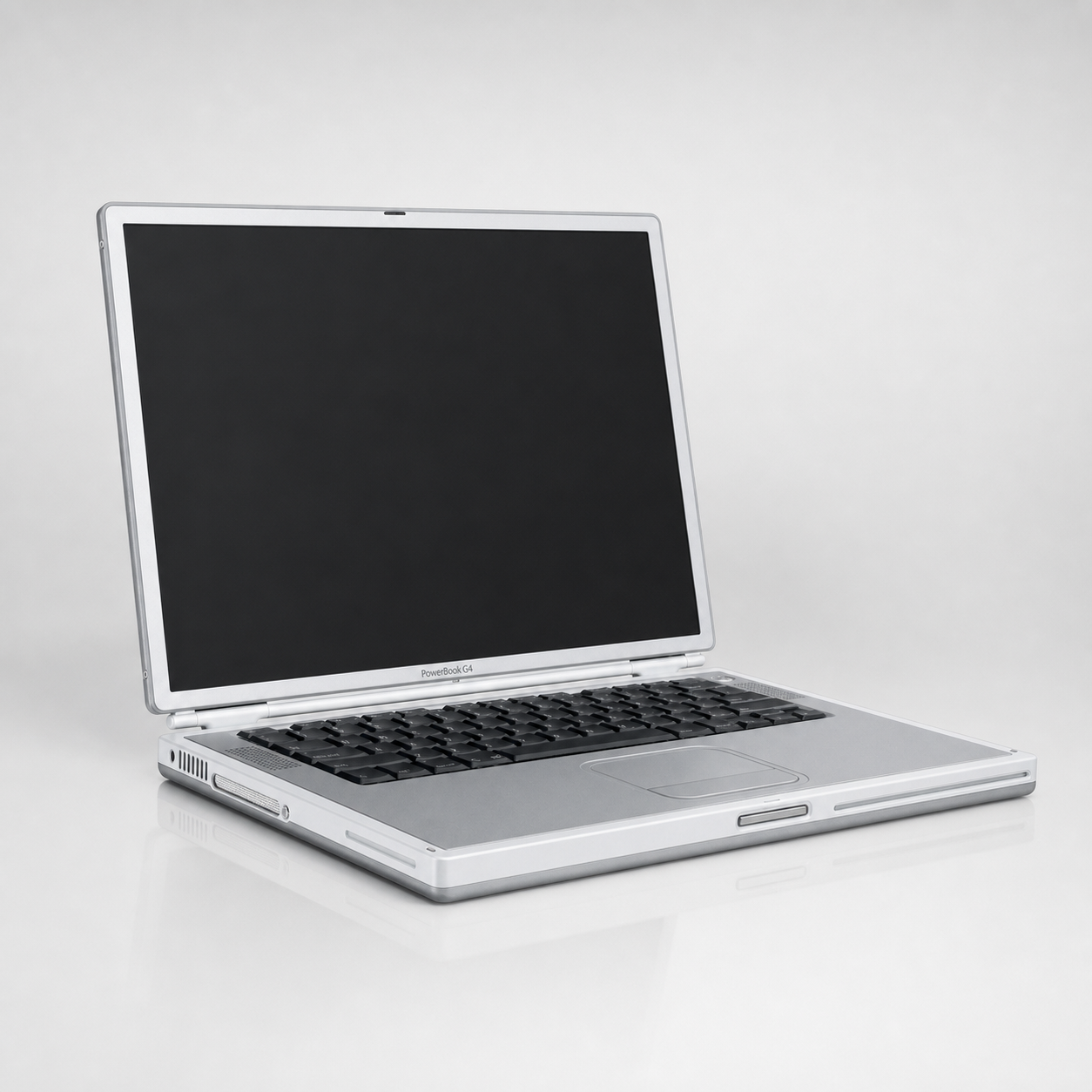
PowerBook G4 Titanium
2002 · Apple
Titanium, DVI revision. 15.2" widescreen at 1152×768, a G4 at 667 MHz or faster, and a palm rest that's still shockingly thin. Notorious for flaking paint and bent lids — but when it came out, nothing else in the industry looked like it.
 Common
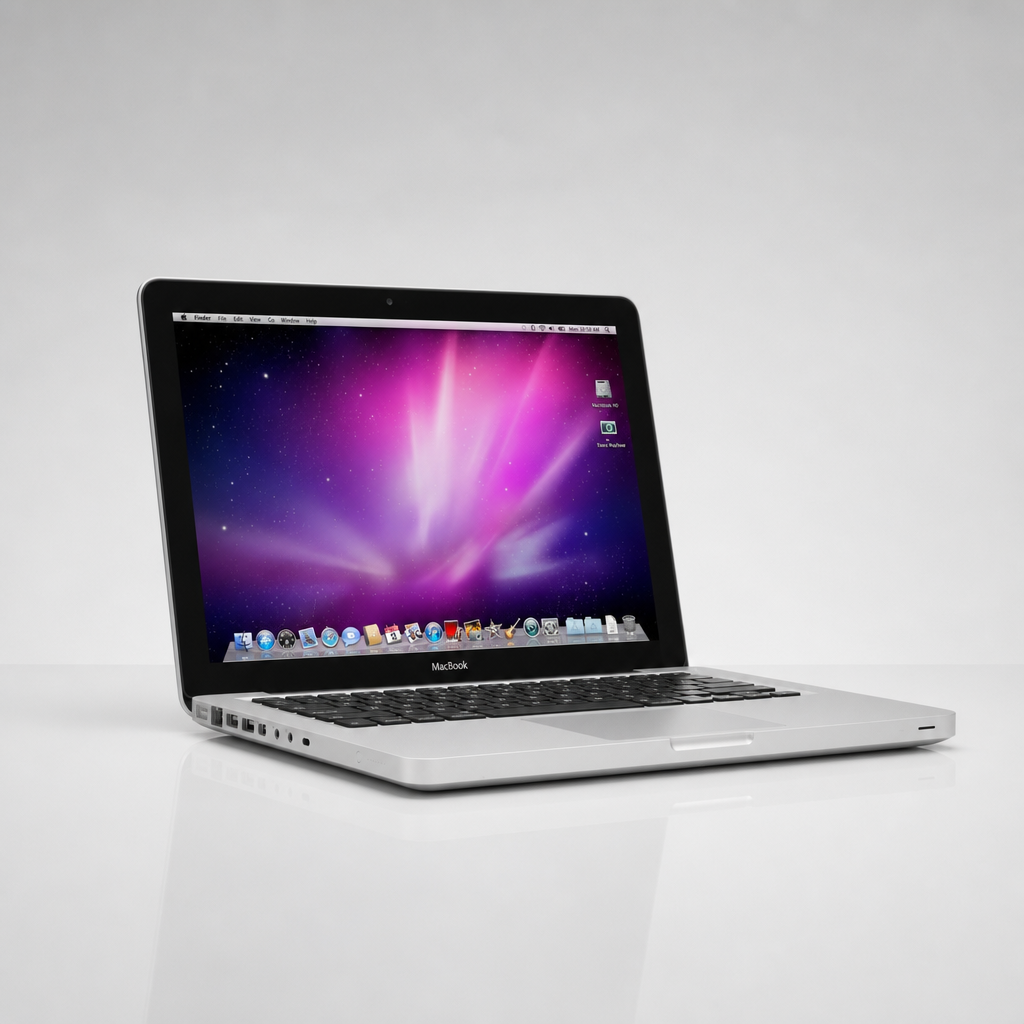
MacBook
2008 · Apple
Late-2008 unibody MacBook. The first consumer laptop milled from a single block of 6000-series aluminum. Glass trackpad, LED backlight, and a rigidity that made every plastic laptop that came before feel like a rental car.
 Rare
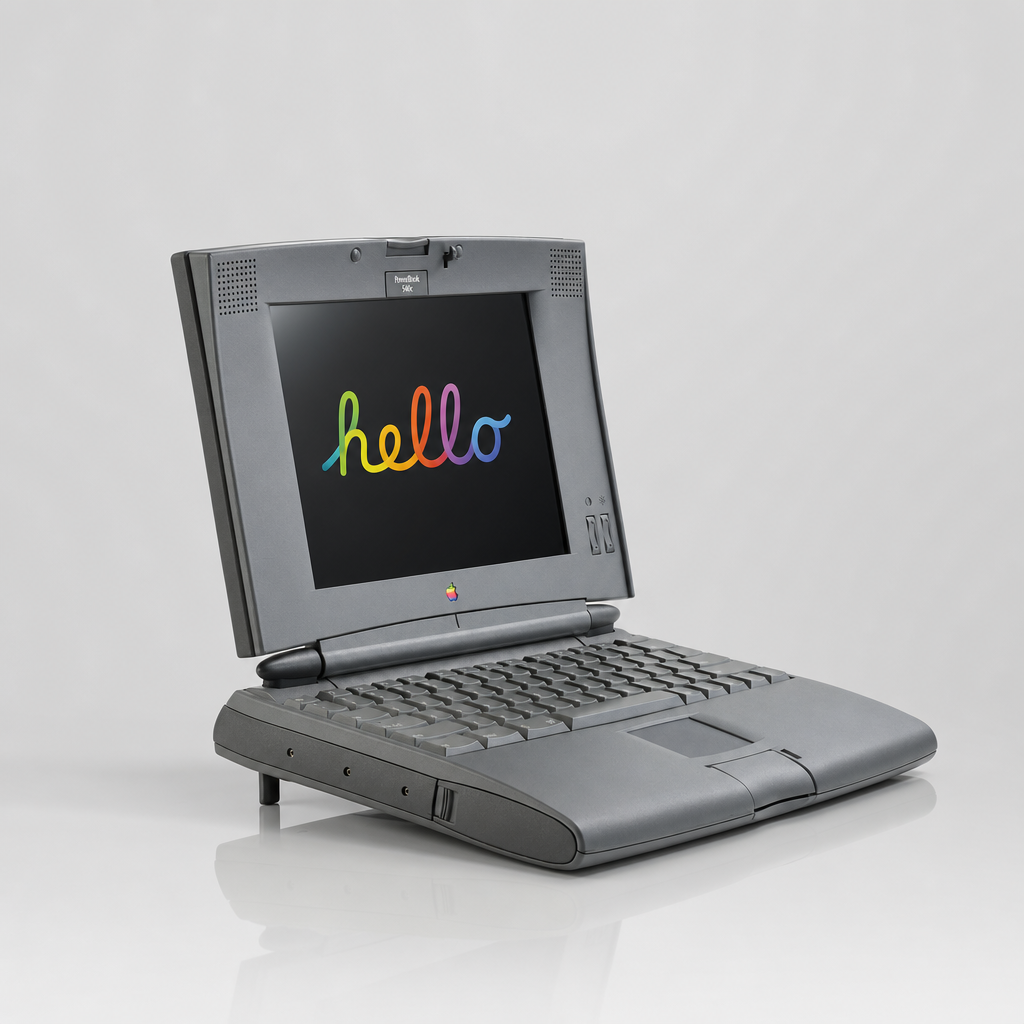
RarePowerBook 540c
1994 · Apple
The flagship. 33 MHz 68040, active-matrix color, and — in this specimen — the rare PowerPC upgrade card that let Blackbird live a second life in the RISC era. This is the PowerBook that set the template.
 Very Rare
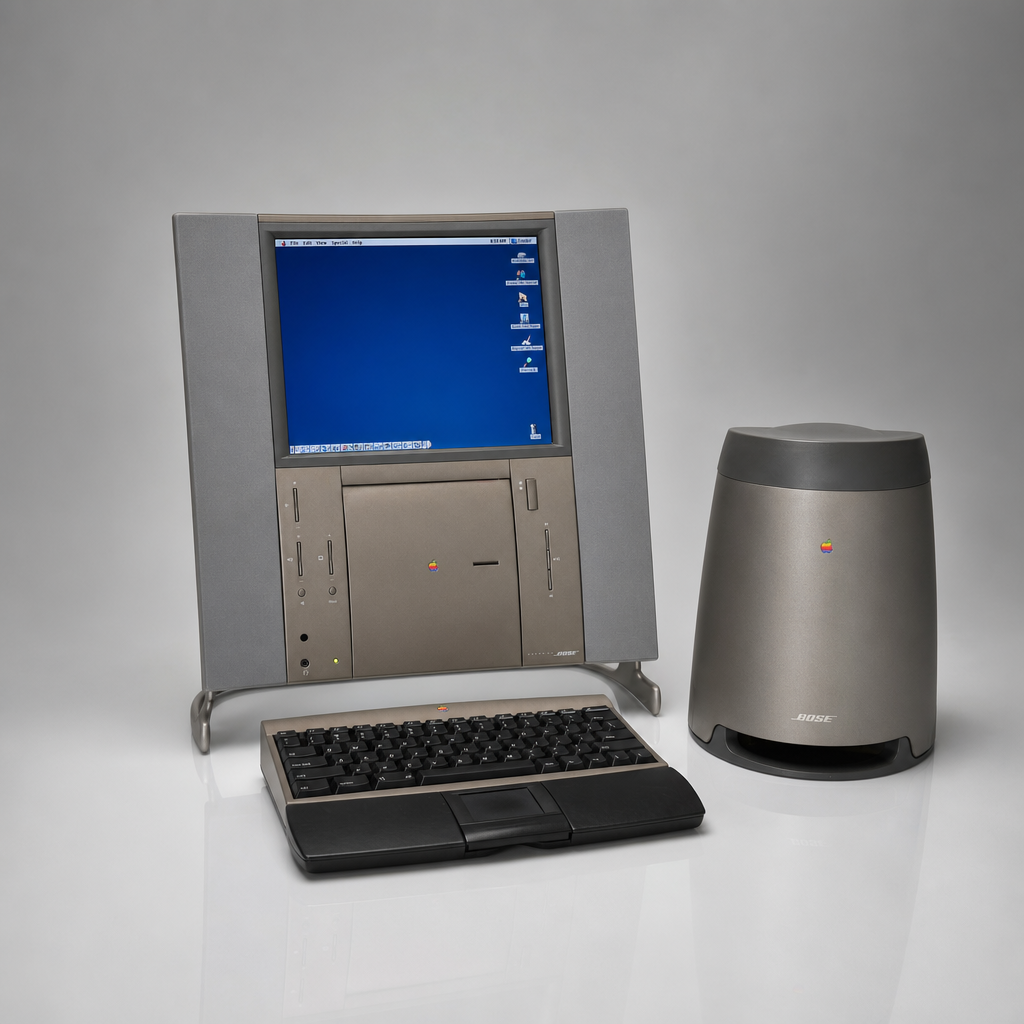
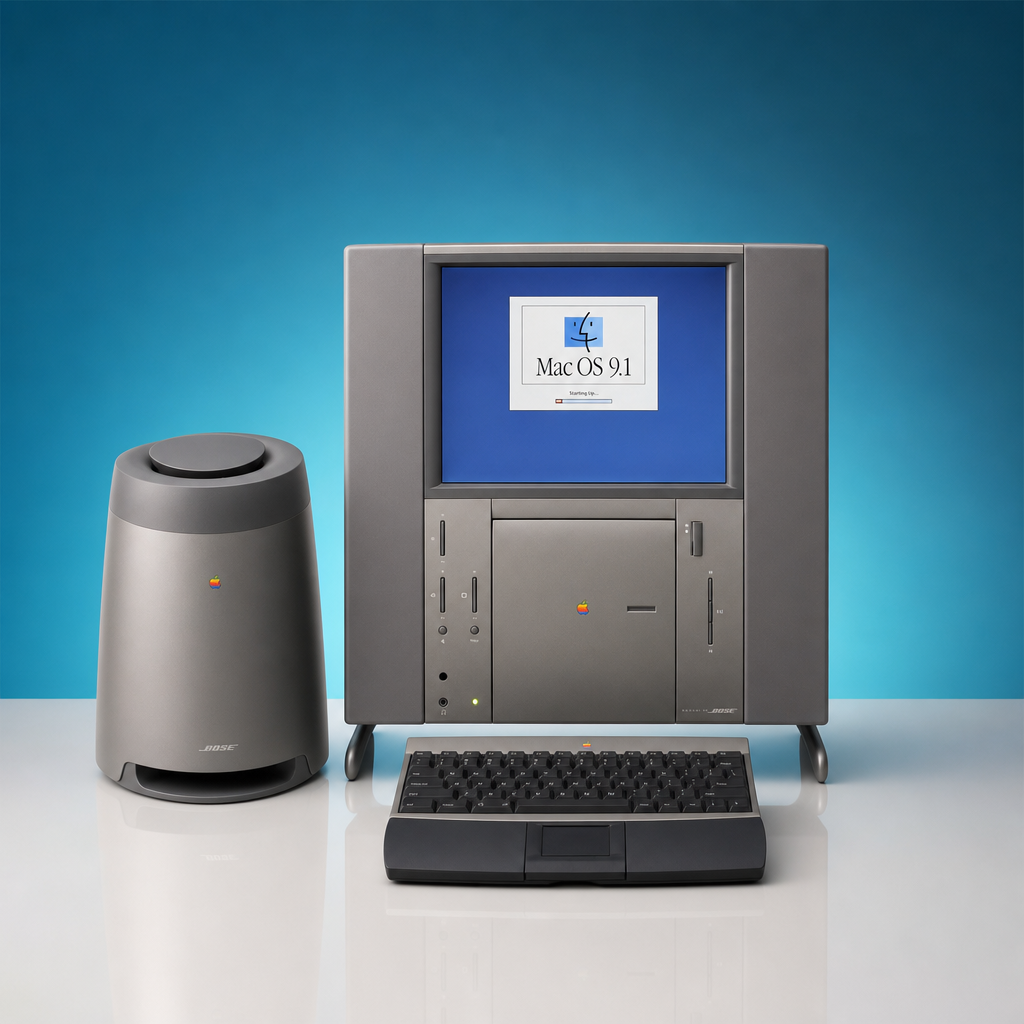
Twentieth Anniversary Mac
1997 · Apple
The Twentieth Anniversary Macintosh is already a machine full of contradiction: luxurious, celebratory, and slightly out of step with the crisis Apple was actually in. With BeOS installed, it becomes even more revealing. It turns from anniversary object into alternate-history exhibit, pairing one of Apple’s most self-conscious late-1990s designs with the operating system from a company Apple nearly bought instead of NeXT.
 Uncommon
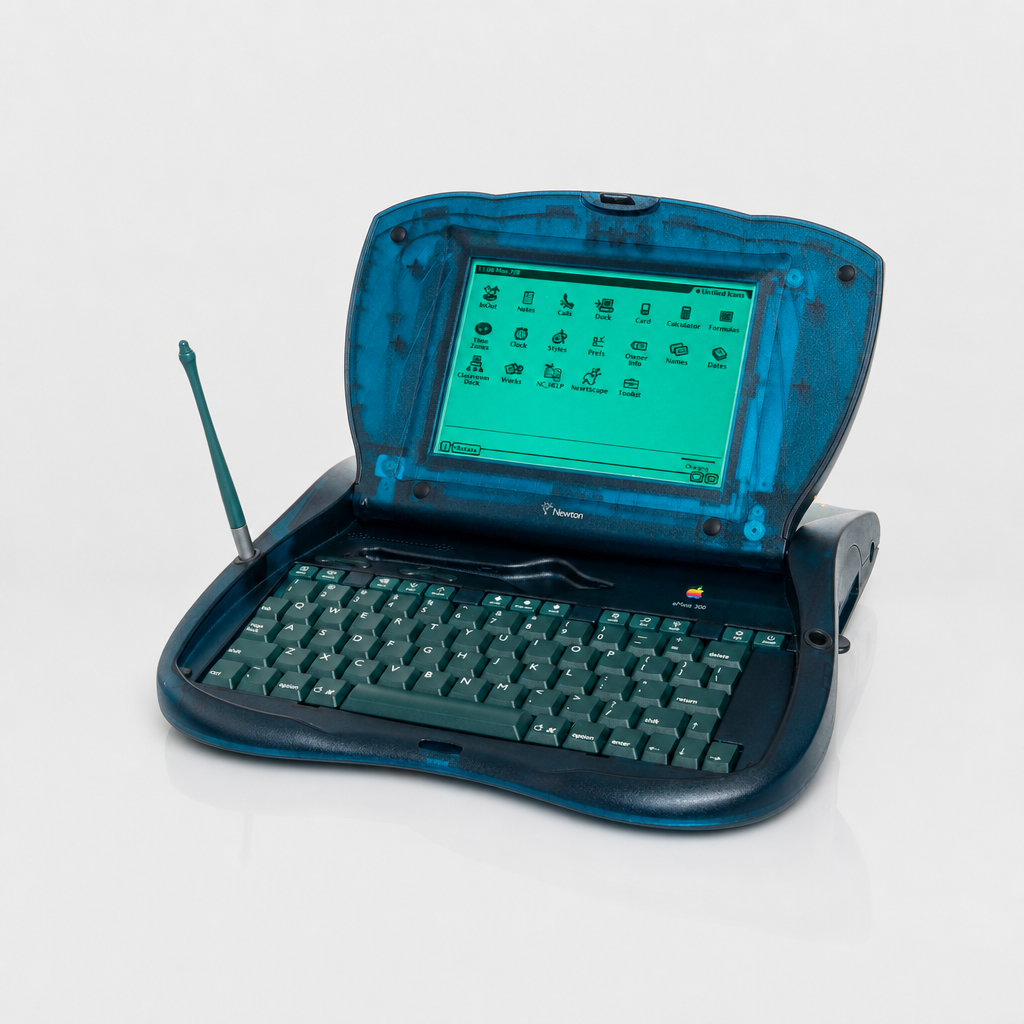
Newton eMate 300
1997 · Apple
The eMate 300 is one of Apple’s most explicitly education-focused products. Rugged, distinctive, and designed with student use in mind, it represents an alternate vision of classroom computing — one centered on portability, note-taking, and personal use rather than fixed desktop labs. Even though it belongs to the Newton family rather than the Macintosh line, it fits perfectly in this story because it shows Apple trying to reinvent educational computing rather than simply scaling down a desktop machine.
 Rare
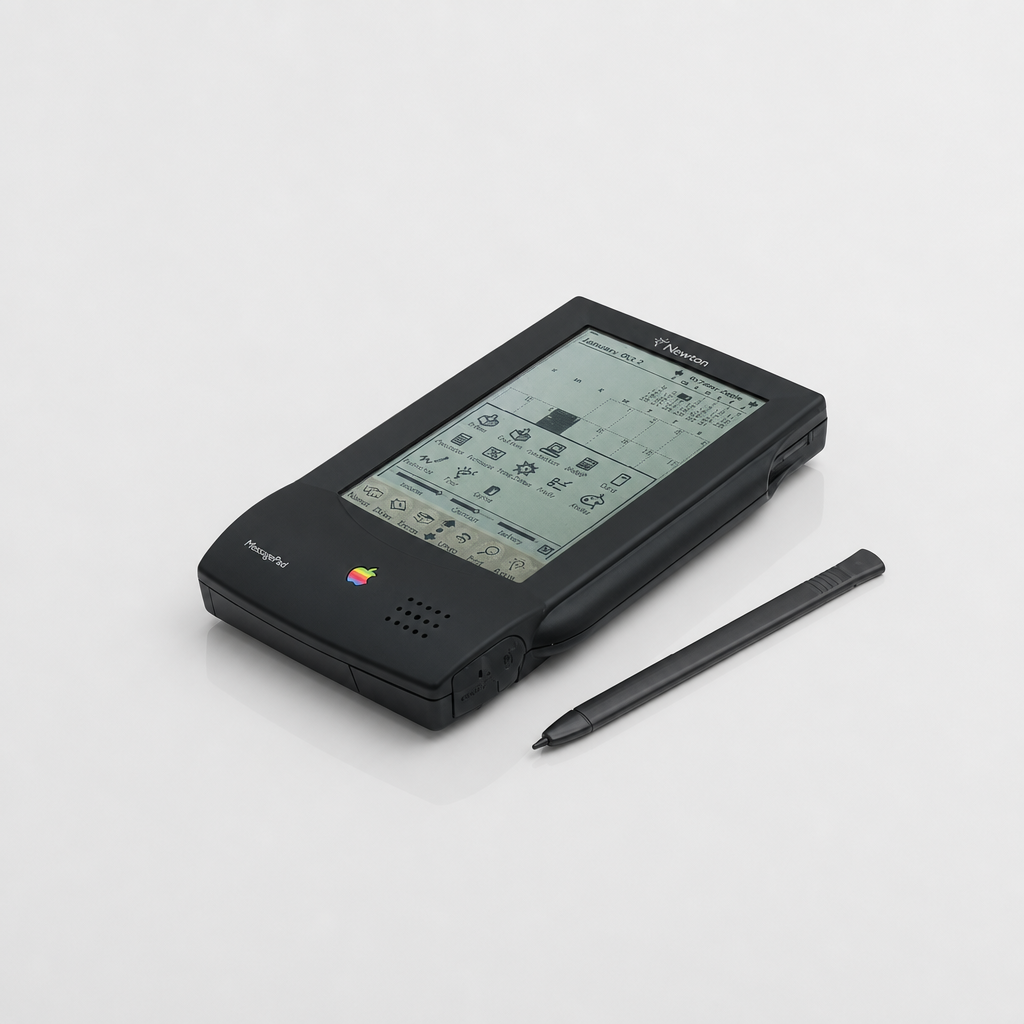
RareNewton Messagepad Original
1993 · Apple
The first one. Running a 20 MHz ARM 610 chip, it was the first consumer device to ship with an ARM processor — the same architecture that would eventually power every iPhone and Apple Silicon Mac. The handwriting recognition was uneven, the price was $700, and the battery life was measured in hours. None of that diminished what it was trying to be.
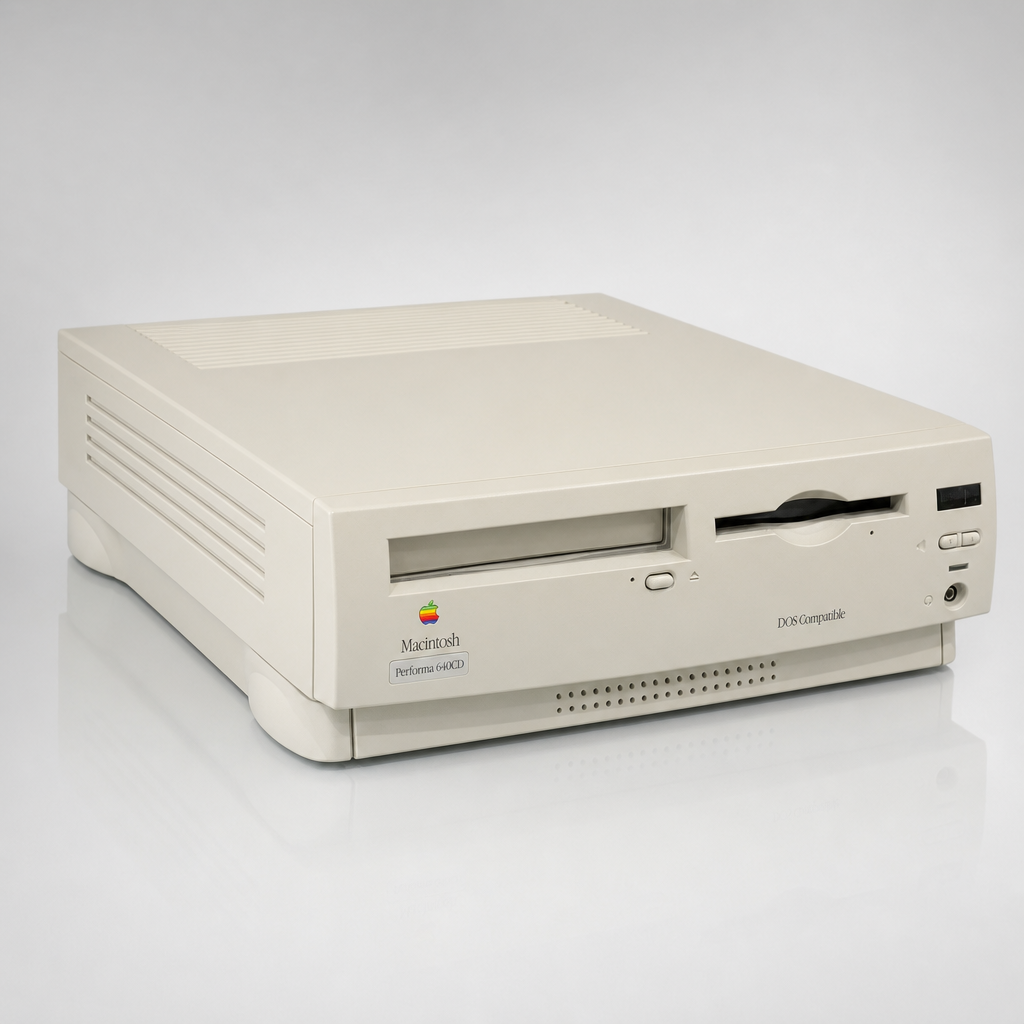
UncommonNewton eMate 300
1997 · Apple
The eMate ran Newton OS 2.1 on a 25 MHz ARM 710a and cost $800 at launch — half the price of a comparable laptop. The translucent green casing predated the iMac G3's candy-color moment by a year. If the eMate had survived, it would have been the first serious attempt at a dedicated student computer. It was discontinued in February 1998 alongside the rest of the Newton line.
 Uncommon
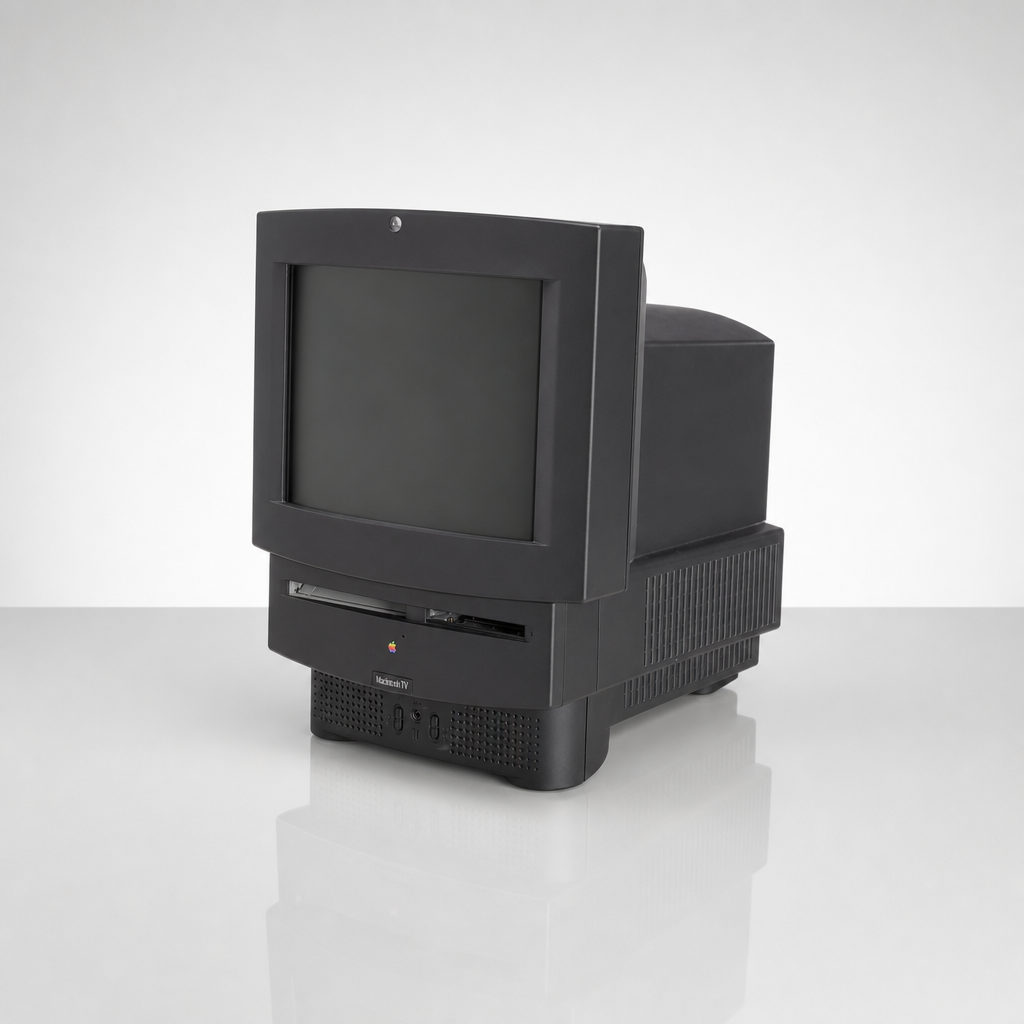
Performa 640CD
1995 · Apple
The Performa 640CD DOS Compatible is one of the most revealing education-era Macs in this collection because it shows Apple responding directly to a practical problem schools faced: important software did not always exist for the Mac. By adding DOS compatibility hardware, Apple was trying to preserve the Macintosh in classrooms and homes that still needed access to the enormous DOS software world. It is an especially vivid reminder that Apple’s education strategy was not only about building approachable machines, but also about reducing the risks for schools that depended on cross-platform software.
 Featured Journey
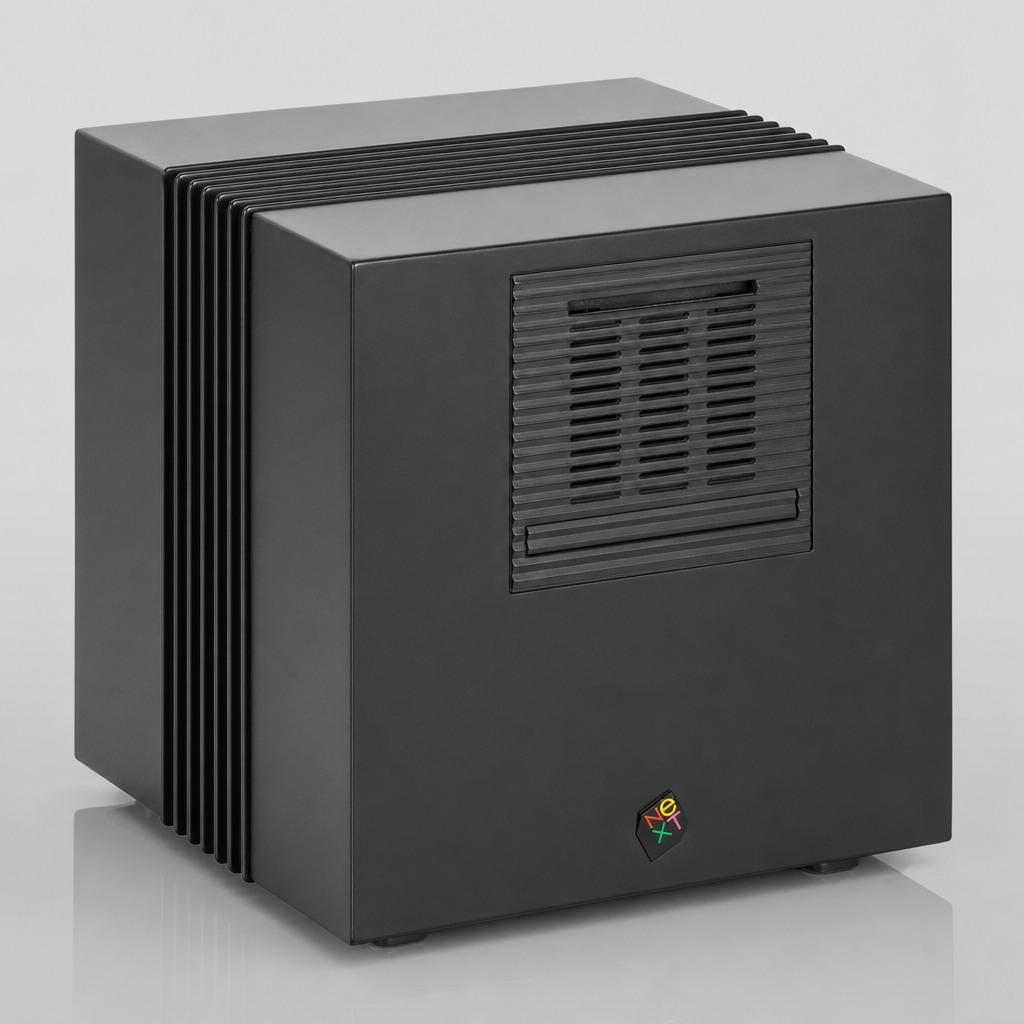
Macintosh TV
1993 · Apple
One of only 10,000 ever made. The only all-black Mac Apple ever sold commercially. It had a real TV tuner — you could watch cable through your Mac. Fully recapped analog board and logic board. Still works, including the TV.
 Featured Journey
NeXT Cube
1990 · NeXT
The Cube is the icon of the whole story: ambitious, costly, elegant, and completely uncompromising. It was not the machine that saved NeXT as a hardware company, but it became the symbol of the platform Apple eventually needed badly enough to acquire. This is the artifact where “Steve Jobs in exile” stops being a biography and starts becoming the future of Apple.
 Featured Journey
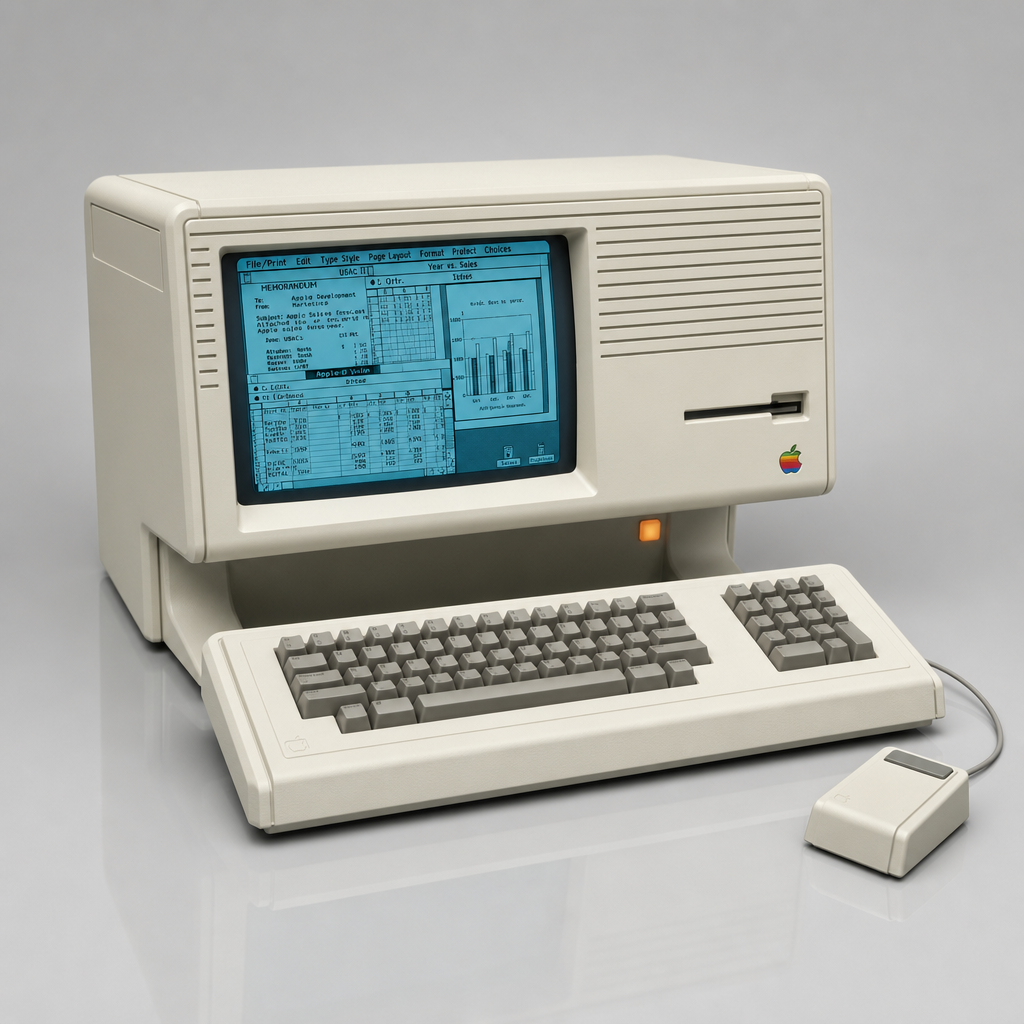
Apple Lisa 2/10
1983 · Apple
The Lisa cost $9,995 in 1983 — over $30,000 today. It was one of the first commercial personal computers with a GUI.. Apple sold fewer than 10,000. This machine was dead when acquired in 2023; two years of work later, it runs perfectly. Recapped PSU and video board, restored keyboard, 32GB ESProfile emulator.
 Very Rare
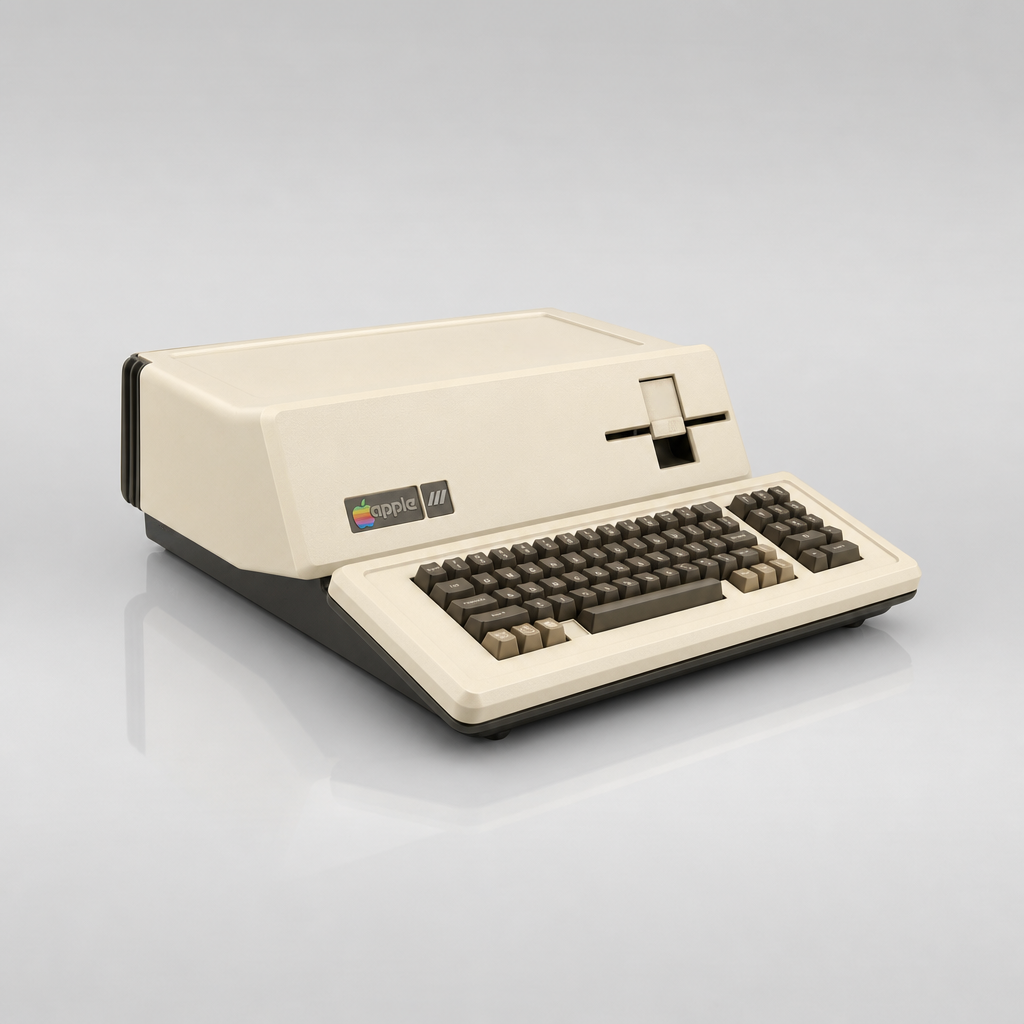
Apple III
1980 · Apple
Apple's first attempt at a serious business machine — and a cautionary tale about what happens when a CEO overrules the engineers. Over 14,000 were recalled at launch to fix chips that literally popped out of their sockets. Steve Wozniak's original design was deemed 'too cheap.' The result nearly killed the company.
 Rare
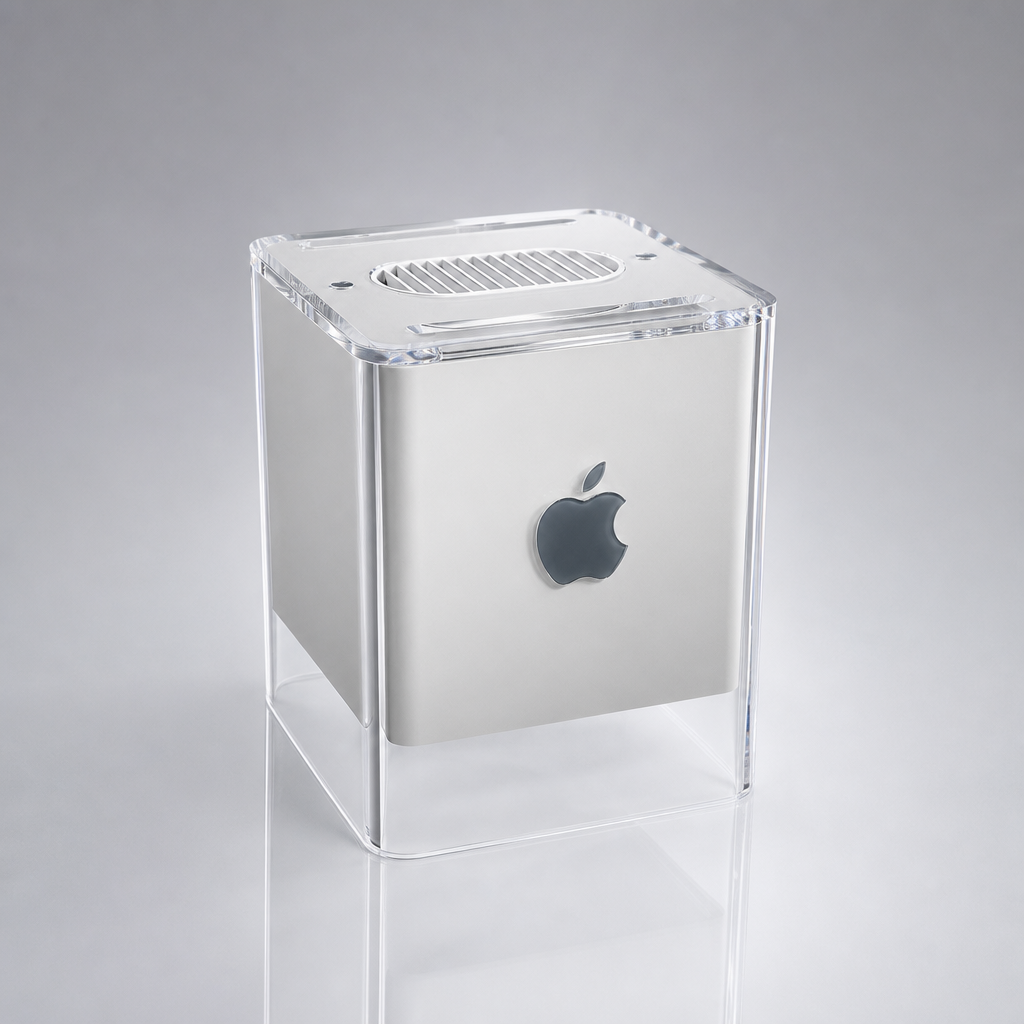
RarePowerMac G4 Cube
2000 · Apple
Suspended in a perfect acrylic cube. No fan. Touch-sensitive power switch. The most beautiful computer Apple ever made, and a commercial failure — $1,799 when consumers expected $1,299. This one has been upgraded to 1GHz.
 Very Rare
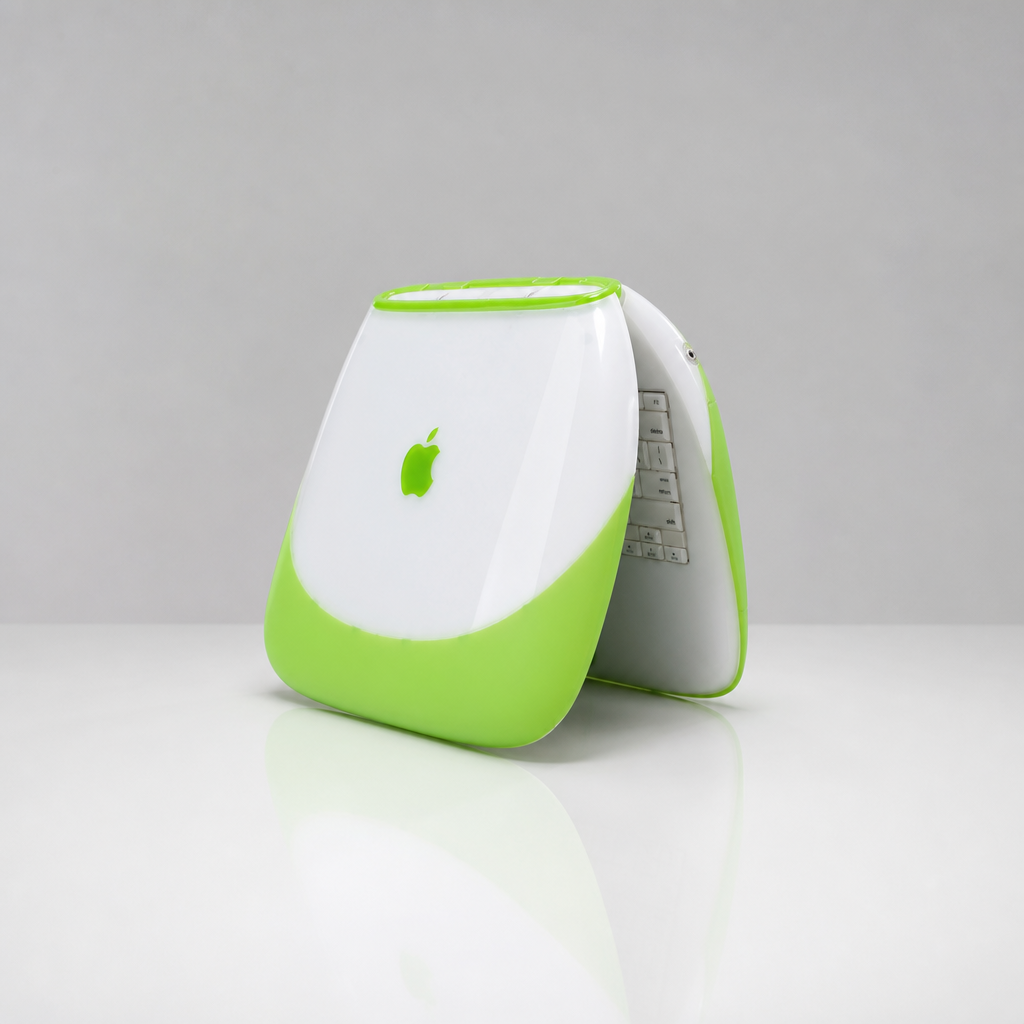
iBook G3 SE
2000 · Apple
Lime Special Edition. The iBook's second generation bumped the G3 to 466 MHz and added FireWire. The color palette went deeper and more saturated — Graphite, Indigo, Key Lime — closing out the clamshell era in style.
 Common
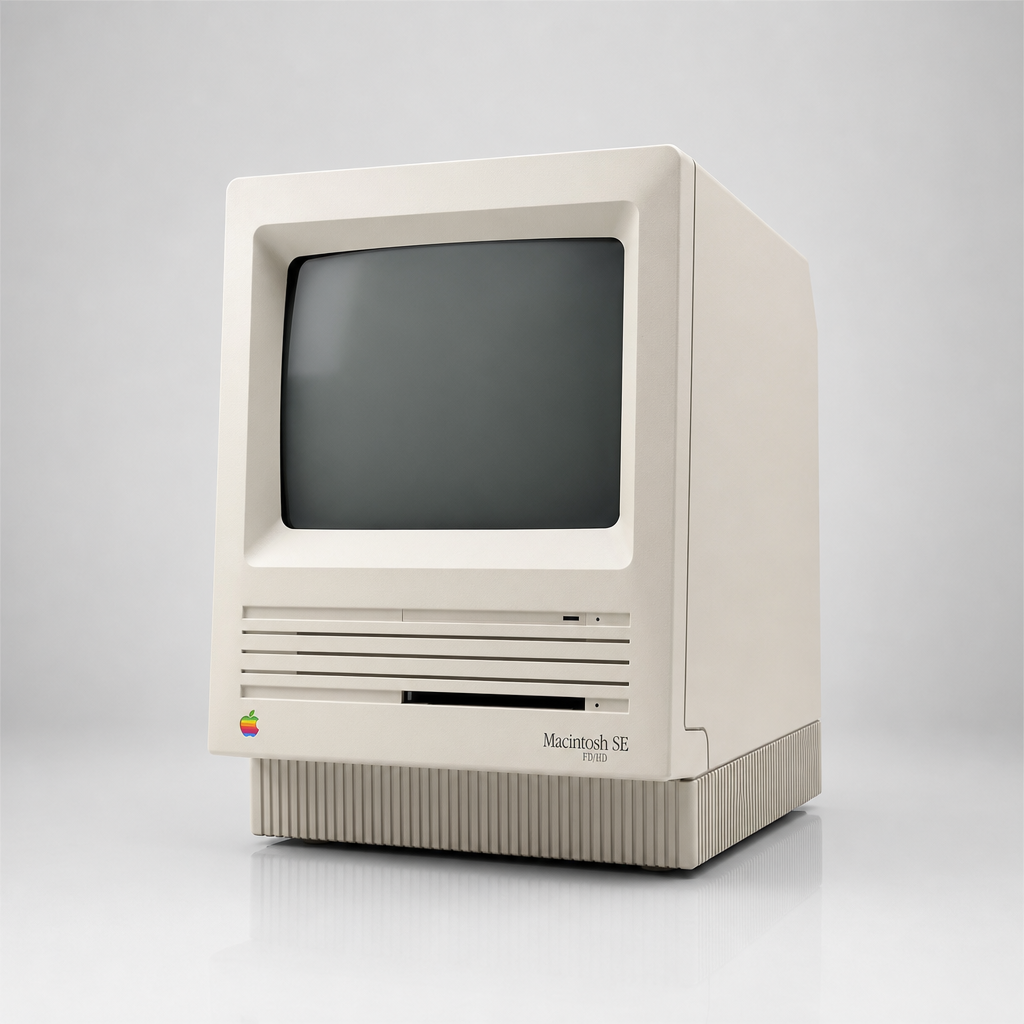
Mac SE FDHD
1989 · Apple
The FDHD ('SuperDrive') could read 1.44MB disks and DOS disks. A single machine that bridged Apple and IBM-compatible worlds at a time when that was revolutionary. The future SE/30 with its 68030, would cram more power into the same compact body — same box, four years of evolution. This specific device sports a 68030 CPU upgrade in an original Macintosh SE.
Very RareiBook G3 SE
2000 · Apple
The SE Lime 466MHz is the fastest and rarest of the original clamshell run.
 Uncommon
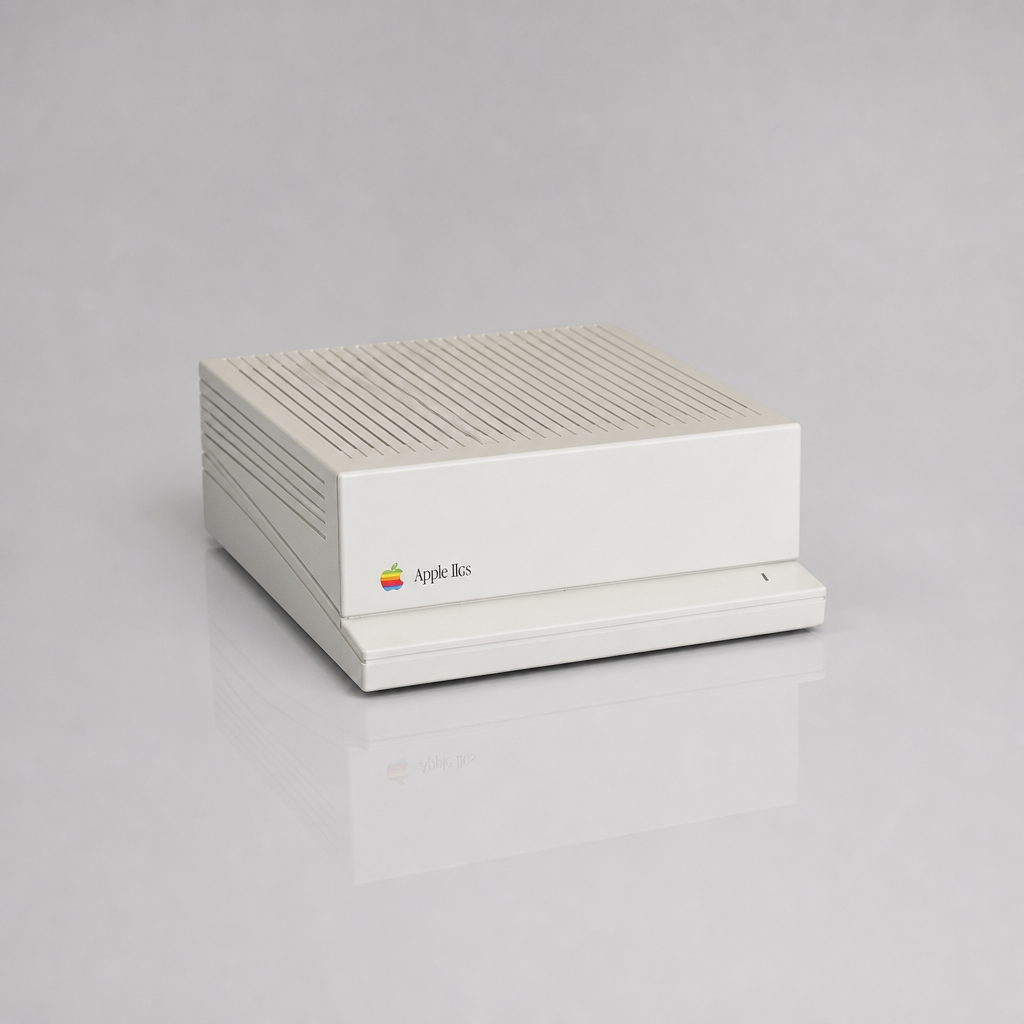
Apple IIgs
1986 · Apple
The IIgs is where Apple’s education story starts to overlap with the Macintosh era. It kept the Apple II line alive for schools while borrowing some of the polish and ambition of the Mac. In that sense, it feels like a transitional classroom machine: one foot in the Apple II world, the other in the future Apple was trying to build.
 Rare
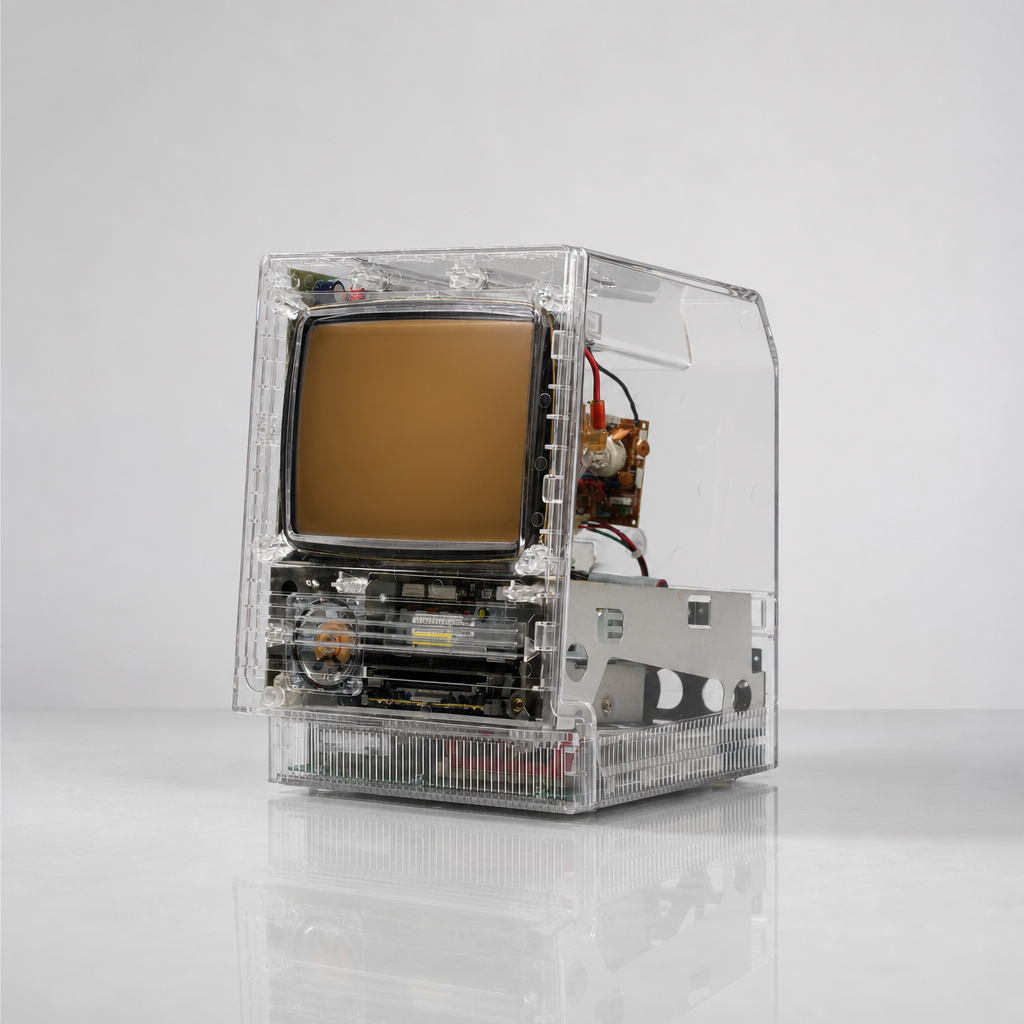
RareMac SE/30
1989 · Apple
The ultimate compact Mac, with better visibility! This Mac SE/30 has a reloaded board, an amber CRT from an IBM 5155, a Big Mess o' Wires ROMinator II, A modern recreation power supply, and a BlueSCSI for storage. Ship of Theseus?
Very RareTwentieth Anniversary Mac
1997 · Apple
2,000 units, each hand-delivered by a Macintosh specialist in a business suit, with a bottle of champagne. This one runs Mac OS 9, BeOS 5.0.3, and has been upgraded to a G3 400MHz. Twenty years of Apple history in a single machine.
 Very Rare
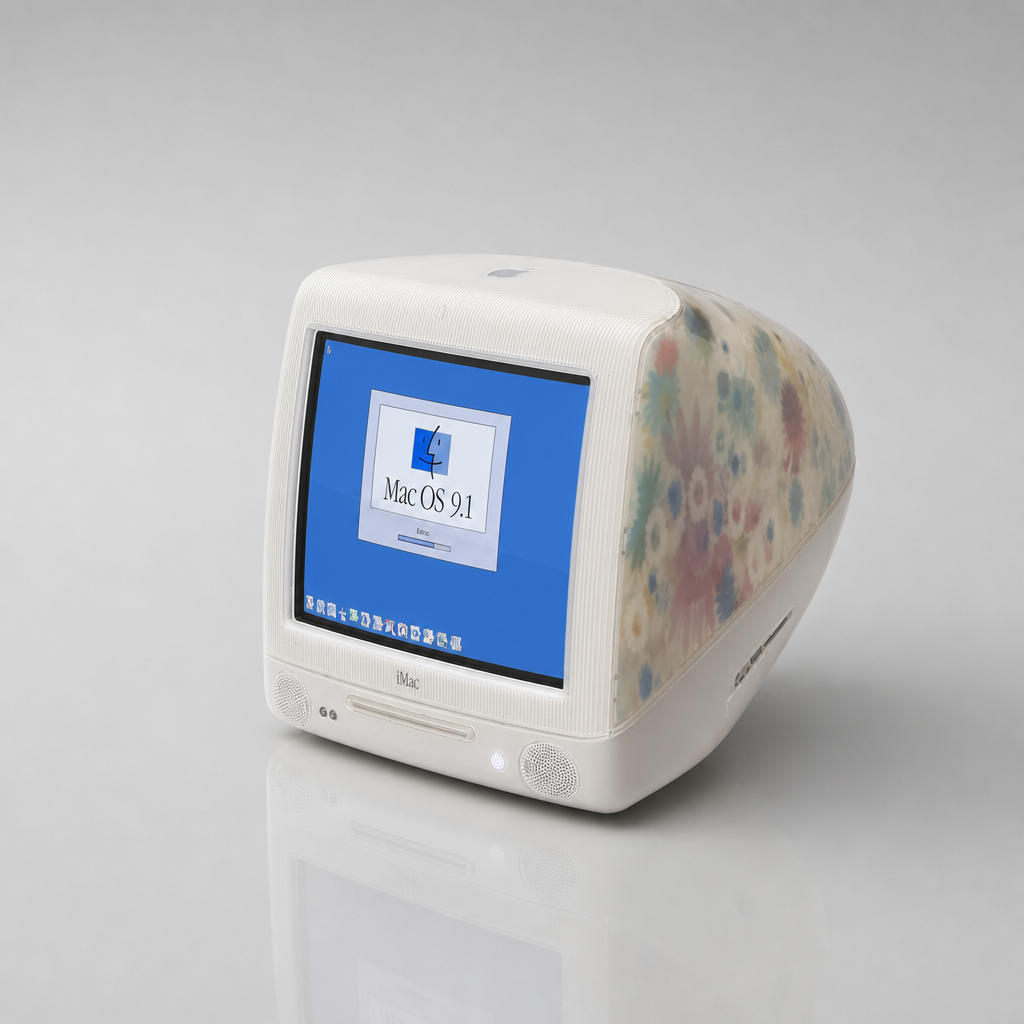
iMac G3
2001 · Apple
The machine that saved Apple. Originally in a Bondi Blue color. Egg-shaped, handle on top. No floppy drive — a decision so controversial it dominated the tech press for months. Jobs was right. But this one has Flower Power!
 Rare
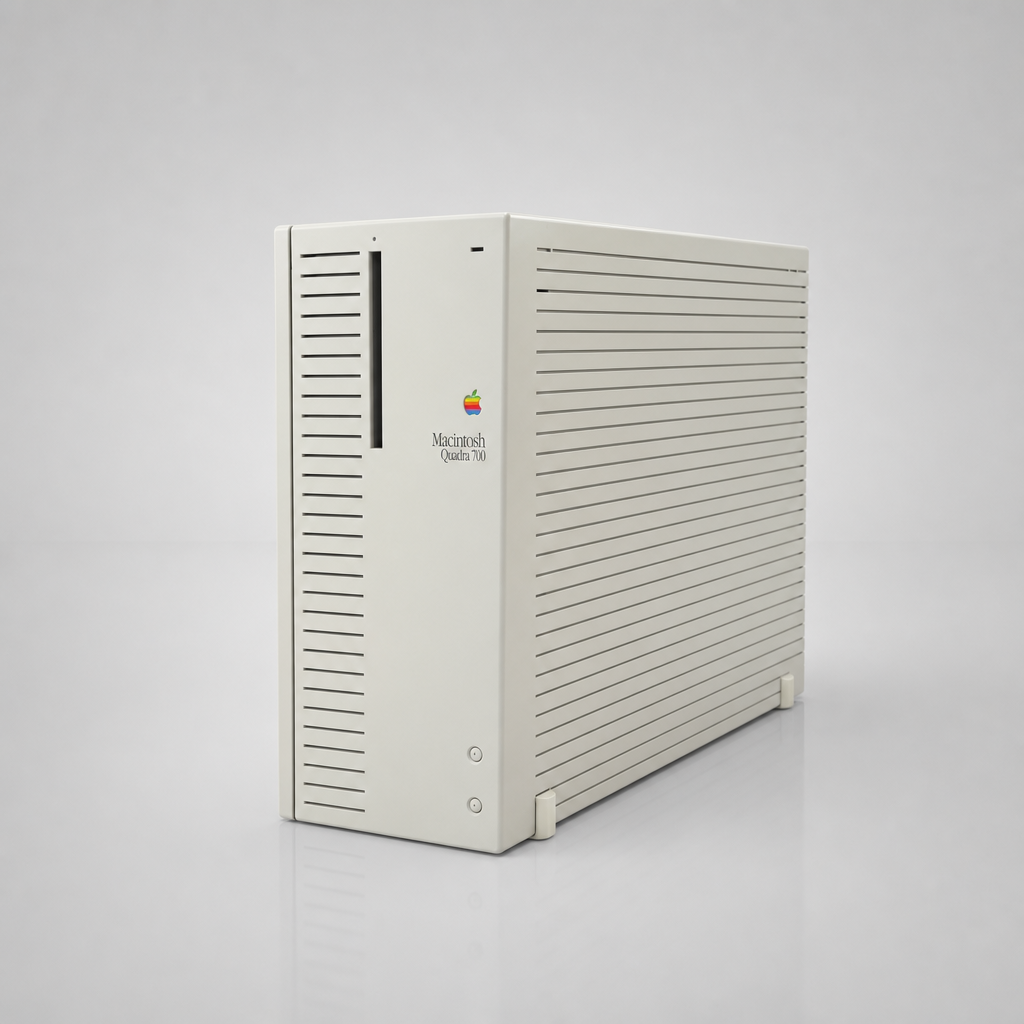
RareQuadra 700
1991 · Apple
The first 68040 Mac. Quiet, fast, and expensive — a professional's tool in a desktop case that looks like it was designed for a bank vault. 25 MHz 68040, onboard Ethernet, 20MB RAM standard. No expense spared.
The Journeys
Before the iPhone: The Newton Years
Apple spent the 1990s trying to build a computer you held in your hand, wrote on, and carried everywhere. They got the concept right. The technology wasn't ready. This is the story of the decade that had to fail so the iPhone could succeed.
Think Different: The Machines That Stood Apart
Long before “Think Different” became Apple’s most famous slogan, the company had a habit of making computers that refused to blend in. Some were luxury objects. Some were playful experiments in color and form. Others were impractical, ambitious, or simply unlike anything their competitors would have attempted. This journey gathers the machines where Apple’s instinct to stand apart became visible in hardware. In some, that difference came from the factory — through unusual materials, bold styling, or unexpected purpose. In others, it has been sharpened through restoration, modification, and survival. Together, they show that “Think Different” was more than a marketing campaign. It was a design philosophy, a business gamble, and, in many cases, a collector’s challenge. “Think Different” was a slogan, but it was also a design brief. It justified risk, encouraged personality, and gave Apple permission to make computers that were not merely useful, but memorable. Some of the machines in this journey were official statements from the company itself. Others became distinctive through restoration and reinvention. All of them show that the most interesting Apple hardware has rarely been the most ordinary.
From Luggable to Featherweight
From the luggable-ish computing of the Apple IIc to the featherweight metal of the MacBook Air — four decades of Apple portability, traced through the machines that carried them from the desktop to the airport lounge and everywhere in between.
Ready for a deeper dive into the vault?
Browse the full timeline of every device in the collection — filterable by era, category, and condition.