Volume VIII
Think Different: The Machines That Stood Apart
Long before “Think Different” became Apple’s most famous slogan, the company had a habit of making computers that refused to blend in. Some were luxury objects. Some were playful experiments in color and form. Others were impractical, ambitious, or simply unlike anything their competitors would have attempted. This journey gathers the machines where Apple’s instinct to stand apart became visible in hardware. In some, that difference came from the factory — through unusual materials, bold styling, or unexpected purpose. In others, it has been sharpened through restoration, modification, and survival. Together, they show that “Think Different” was more than a marketing campaign. It was a design philosophy, a business gamble, and, in many cases, a collector’s challenge. “Think Different” was a slogan, but it was also a design brief. It justified risk, encouraged personality, and gave Apple permission to make computers that were not merely useful, but memorable. Some of the machines in this journey were official statements from the company itself. Others became distinctive through restoration and reinvention. All of them show that the most interesting Apple hardware has rarely been the most ordinary.
Before the Slogan
The Narrative
Before “Think Different” was printed on posters, Apple was already making machines that did not fit neatly into the rest of the industry. Some were experiments. Some were curiosities. Some became distinctive only because they survived long enough to be reinvented.
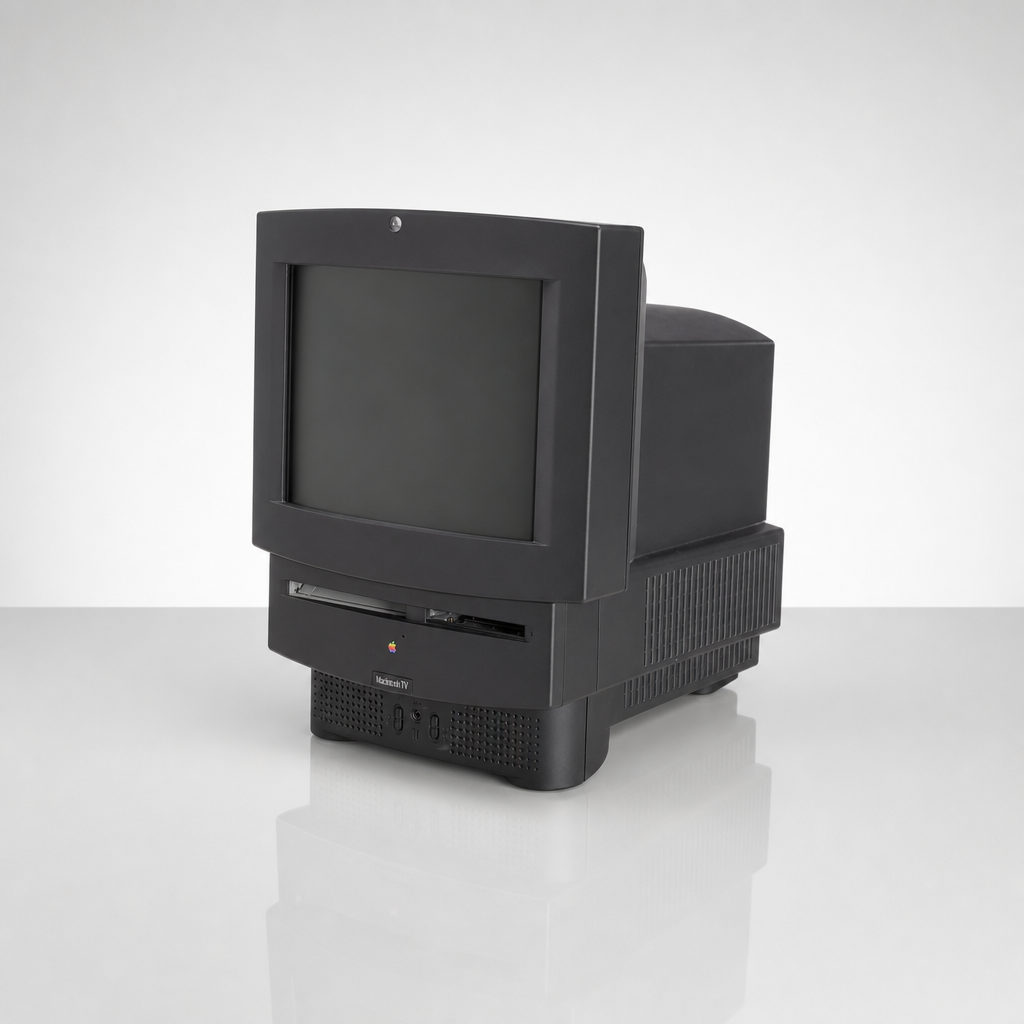
Macintosh TV
Apple • 1993
The Macintosh TV was one of Apple’s strangest commercial experiments: a black Macintosh that doubled as a television, arriving years before digital media convergence became commonplace. It was not a major success, and its compromises were obvious, but that misses the point. The Macintosh TV mattered because it showed Apple trying to make the computer into something more than a beige work machine. It was an early signal that distinctiveness — visual, conceptual, and cultural — could be part of the product itself.
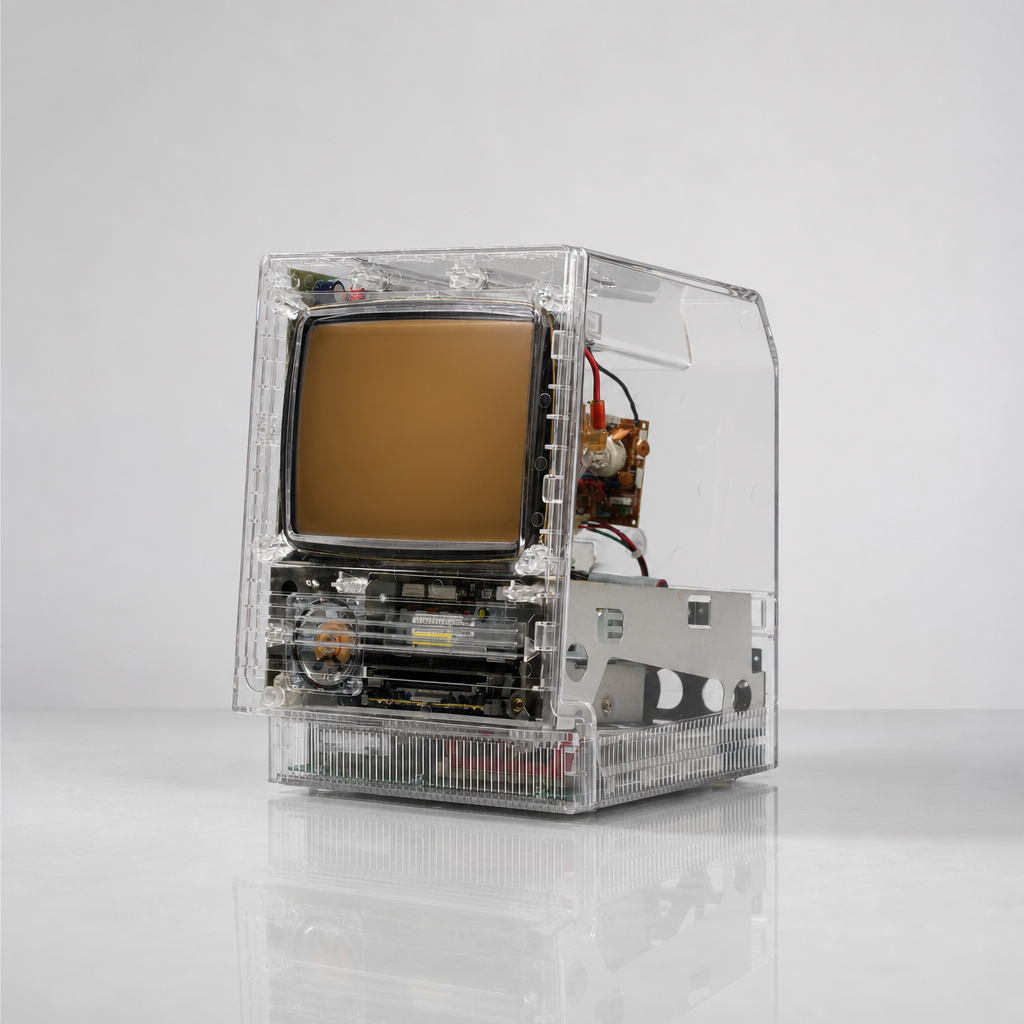
Mac SE/30
RareApple • 1989
The Macintosh SE/30 is often remembered as the ultimate compact Mac: small, serious, and unexpectedly powerful. This example turns that reputation into something more theatrical. Its clear case reveals the machine as an object of engineering, while the amber CRT swap gives it a look closer to laboratory equipment than office appliance. Inside, a reloaded logic board makes it not just a preserved artifact, but a rebuilt one — a machine given a second life rather than simply admired from a distance.
Think Different Made Physical
By the late 1990s, Apple was no longer content to be merely compatible or competitive. It wanted to be unmistakable. In this period, difference became a selling point: in color, in materials, in silhouette, and in the sense that owning one of these machines said something about the person using it.
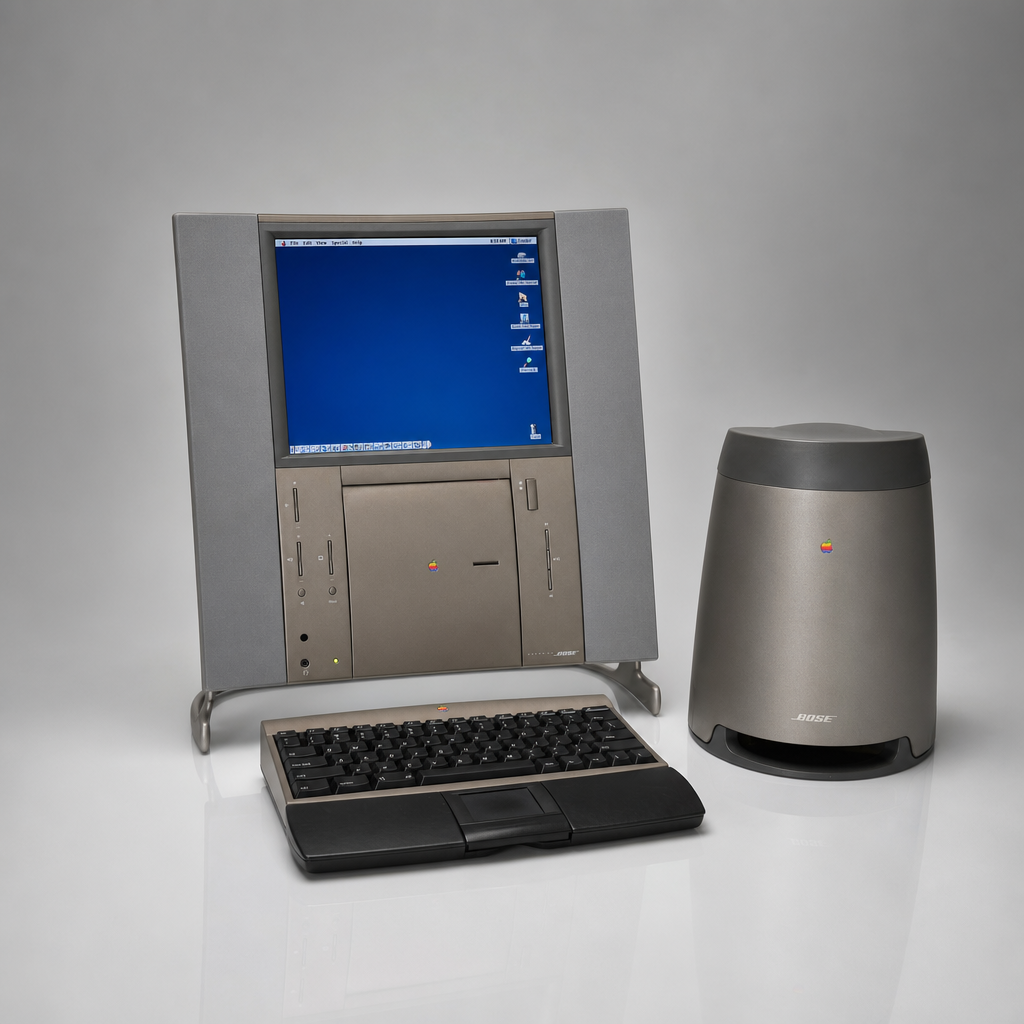
Twentieth Anniversary Mac
Very RareApple • 1997
The Twentieth Anniversary Macintosh was less a mainstream computer than a ceremonial object: part desktop Mac, part luxury statement, part anniversary tribute. Thin, vertically arranged, and paired with a bespoke sound system, it looked unlike any other Macintosh of its era. This example pushes that idea even further. Fitted with a CPU accelerator and running BeOS, it stops being just a rare commemorative machine and becomes something more interesting — a glimpse of an alternate Apple, where prestige hardware and experimental software met in the same improbable package.
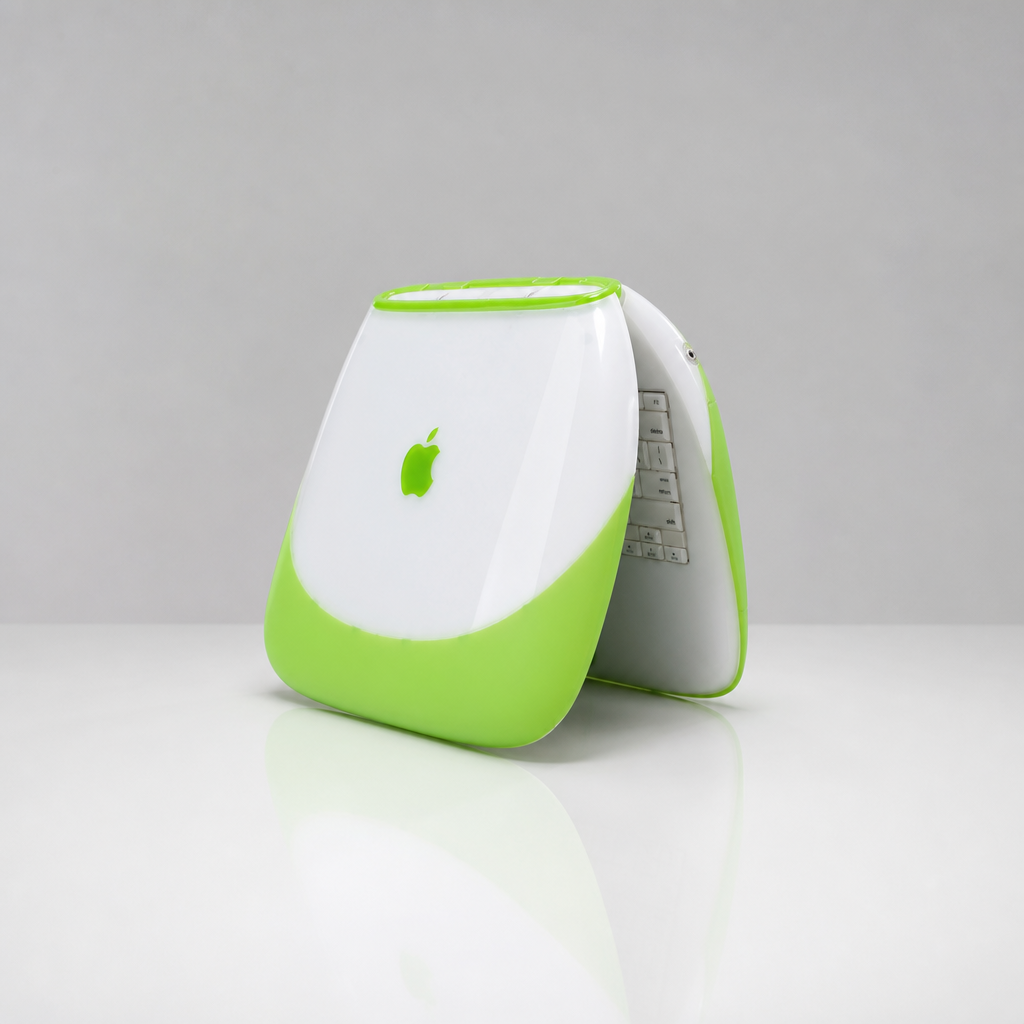
iBook G3 SE
Very RareApple • 2000
The original iBook already rejected the gray seriousness of most notebooks. The special-edition Lime model pushed that rejection further, turning a portable computer into something bright, playful, and impossible to ignore. It belonged to a moment when Apple was willing to let color carry meaning — not as decoration alone, but as identity. In lime green, the iBook feels less like office equipment than a declaration that personal technology could have personality.
PowerMac G4 Cube
RareApple • 2000
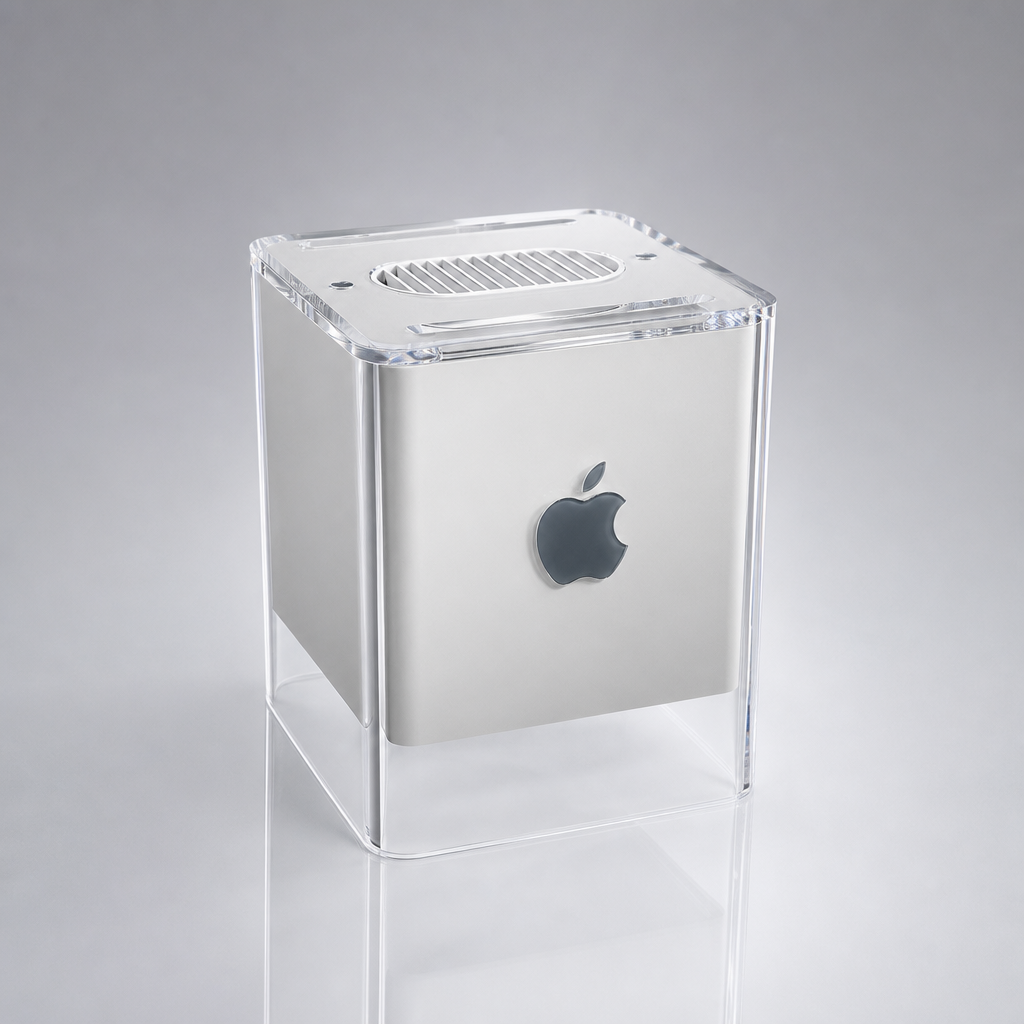
The Power Mac G4 Cube distilled Apple’s “Think Different” era into a single form: minimal, sculptural, and almost implausibly refined. Suspended inside a clear outer shell, the computer looked less like a workstation than a design exhibit. It asked the market to value elegance as much as expansion, and for that reason it struggled commercially. But as an expression of Apple’s priorities at the time, few machines were purer. The Cube did not just stand apart — it seemed to exist above the category entirely.
Difference, Continued
The Narrative
The slogan faded, but the instinct remained. Apple’s most unusual machines invited attachment, experimentation, and reinterpretation. In collections like this one, “Think Different” survives not only in what Apple built, but in what enthusiasts chose to preserve, modify, and make their own.
PowerMac G3 All-in-One
Very RareApple • 1998
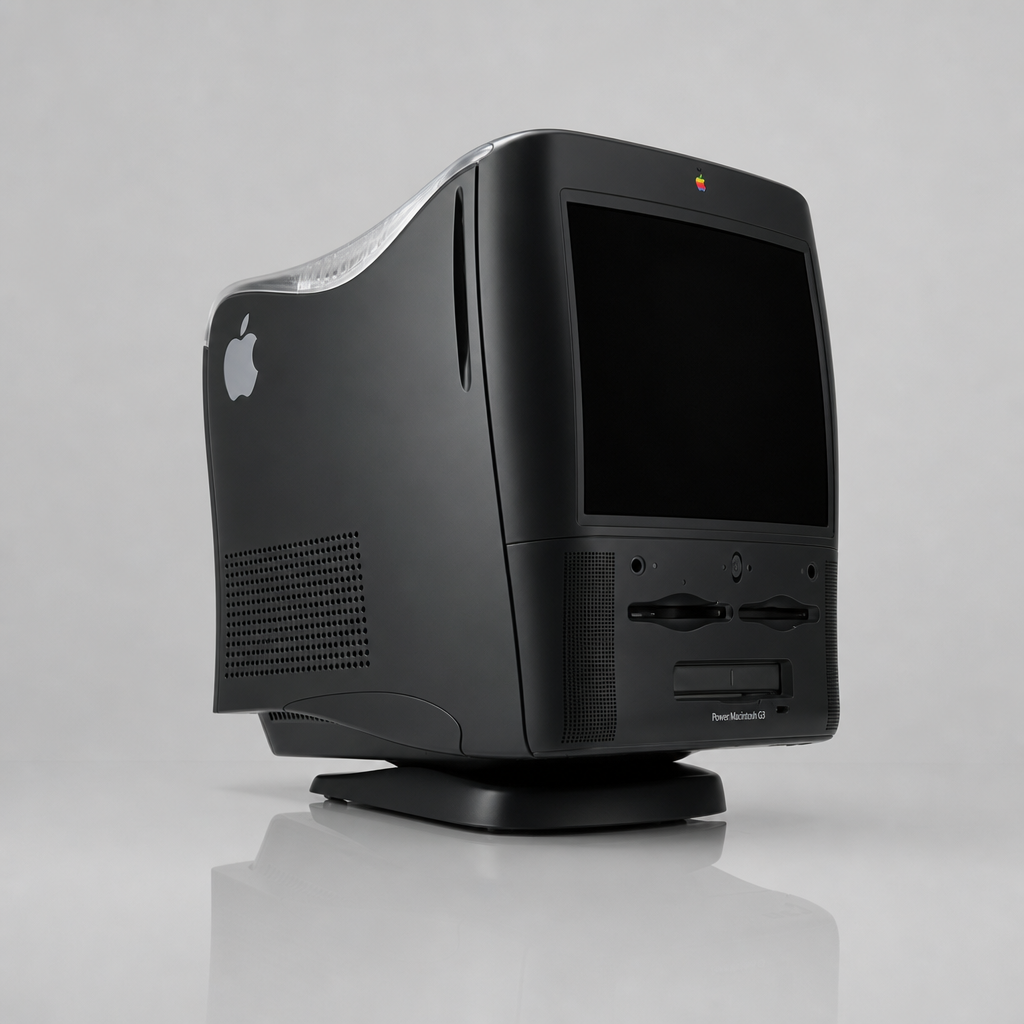
The Power Macintosh G3 All-In-One began life as a practical machine, built with classrooms and institutional use in mind. In its original form, it was solid, useful, and unmistakably of its time. This example transforms that identity completely. Refinished in black and upgraded with a G4 processor, it feels less like a school computer than a custom-built counterfactual — a version of the all-in-one Apple never sold, but one that makes immediate emotional sense the moment it appears. It is a reminder that Apple’s culture of standing apart did not end at the factory door.