Volume VII
From Luggable to Featherweight
From the luggable-ish computing of the Apple IIc to the featherweight metal of the MacBook Air — four decades of Apple portability, traced through the machines that carried them from the desktop to the airport lounge and everywhere in between.
Before the Laptop
The Narrative
In 1984 Apple had no laptop. What it had was the IIc — a computer small enough to carry, light enough to set on a kitchen table, and beautiful enough that people did. Steve Jobs called it 'crouch computing.' You didn't quite travel with it; you relocated with it. But the idea — an Apple you could pick up and move — starts right here.
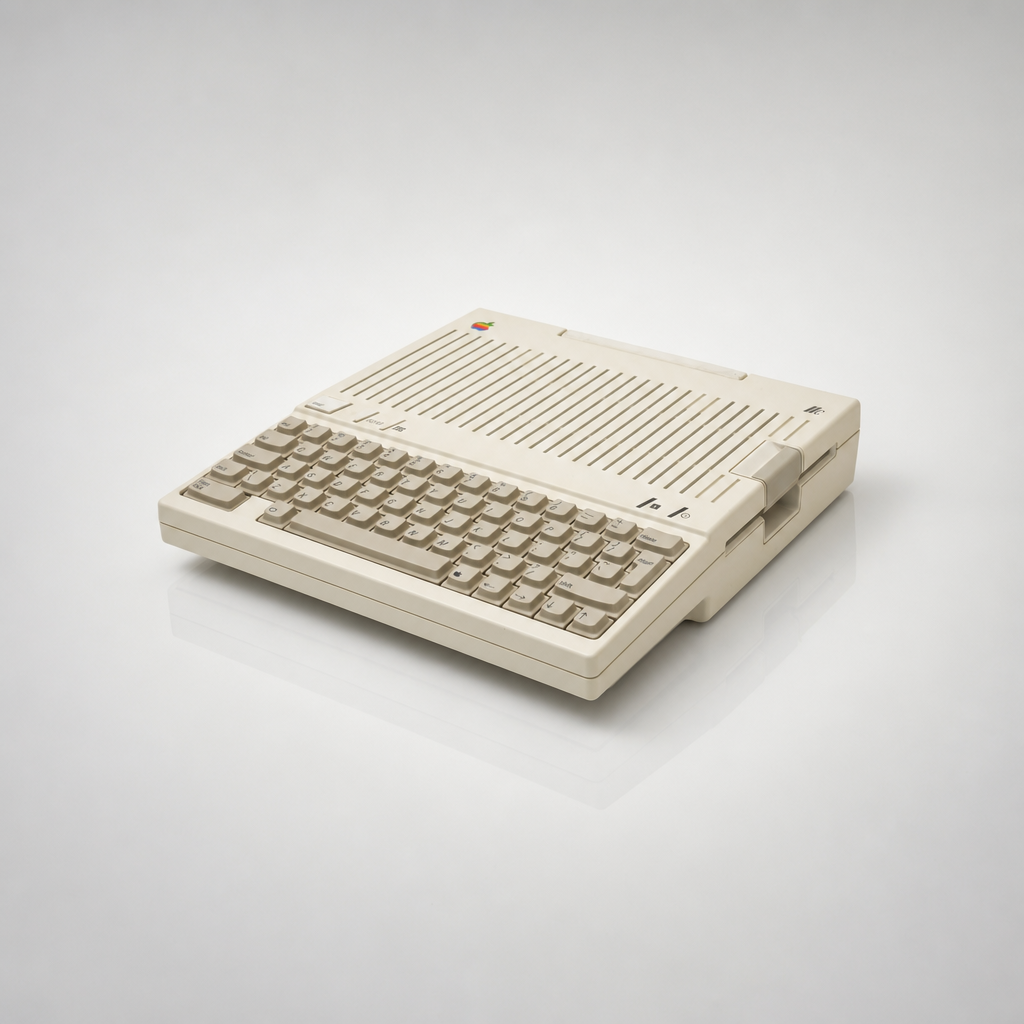
Apple IIc
UncommonApple • 1984
Apple's first real attempt at a portable computer. The handle on the back wasn't a gimmick — it genuinely invited you to pick it up. A 5.25" drive, 128K of RAM, and Frog Design's snow-white wedge defined the form language Apple would chase for the next decade.
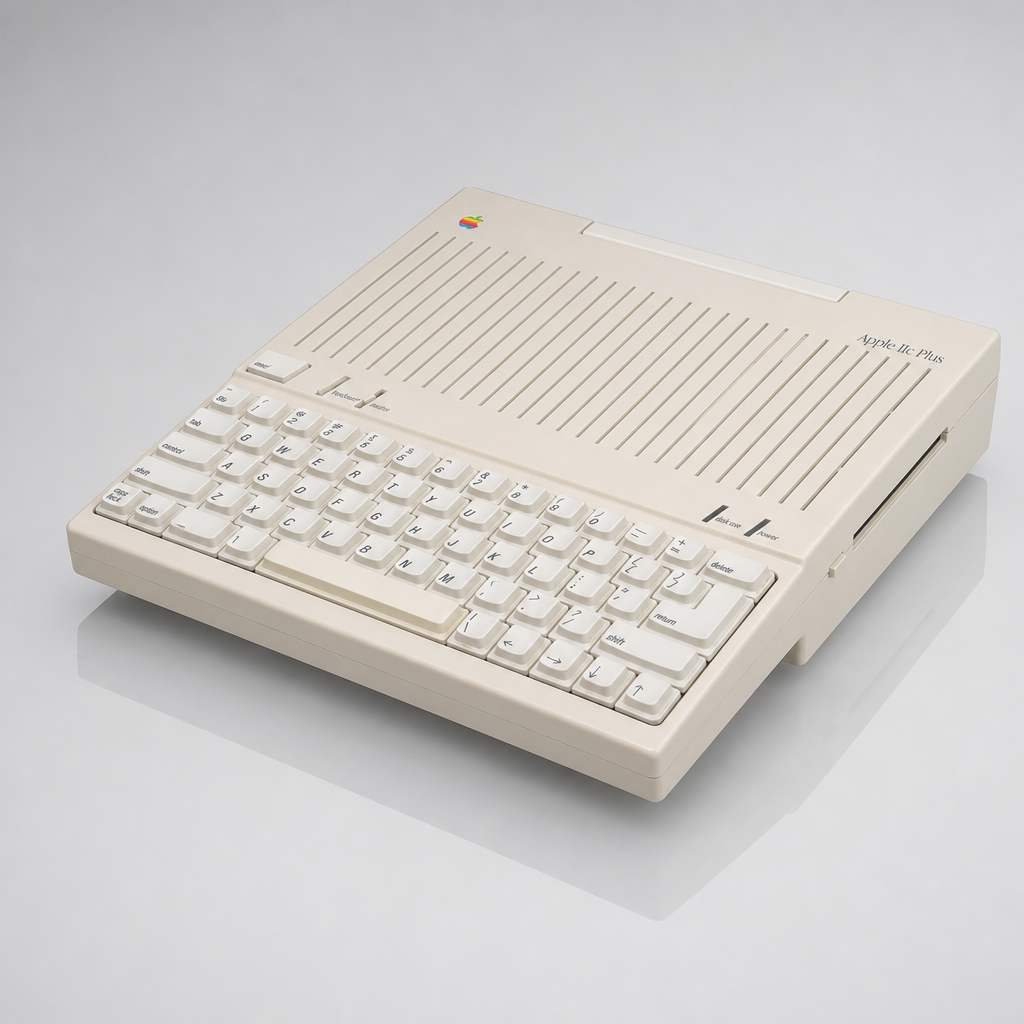
Apple IIc Plus
RareApple • 1988
The refinement. An internal 3.5" drive replaced the external floppy, the 65C02 ran at 4 MHz, and the whole machine felt tighter. It was also, quietly, the last Apple II ever produced.
The First True Laptop
The Macintosh Portable arrived in 1989 as Apple's first battery-powered Mac — and its first genuine failure of proportion. Sixteen pounds, seven thousand dollars, and a lead-acid battery that made it feel like a small suitcase. But inside that brick was a real Mac. The PowerBook line that followed three years later is what the Portable should have been: smaller, lighter, cheaper, and built around the radical idea of palm rests and a centered trackball.
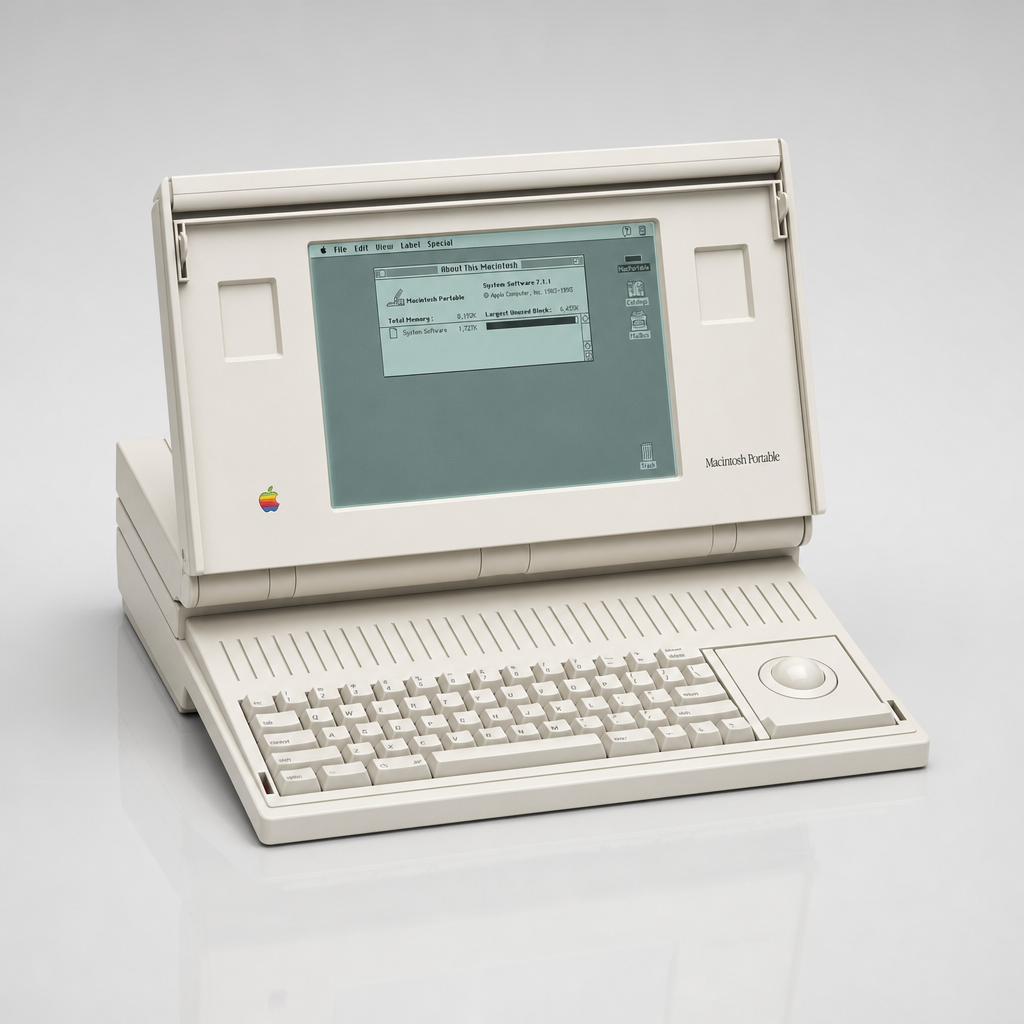
Macintosh Portable
Very RareApple • 1989
The one that started it all — and nearly ended it. An active-matrix display, a full-travel keyboard, and a price tag of $5,800. Too expensive, too heavy, and too soon. But every laptop Apple ever shipped owes something to this machine. This unit has had its backlight upgraded so the screen finally looks the way the engineers wanted.
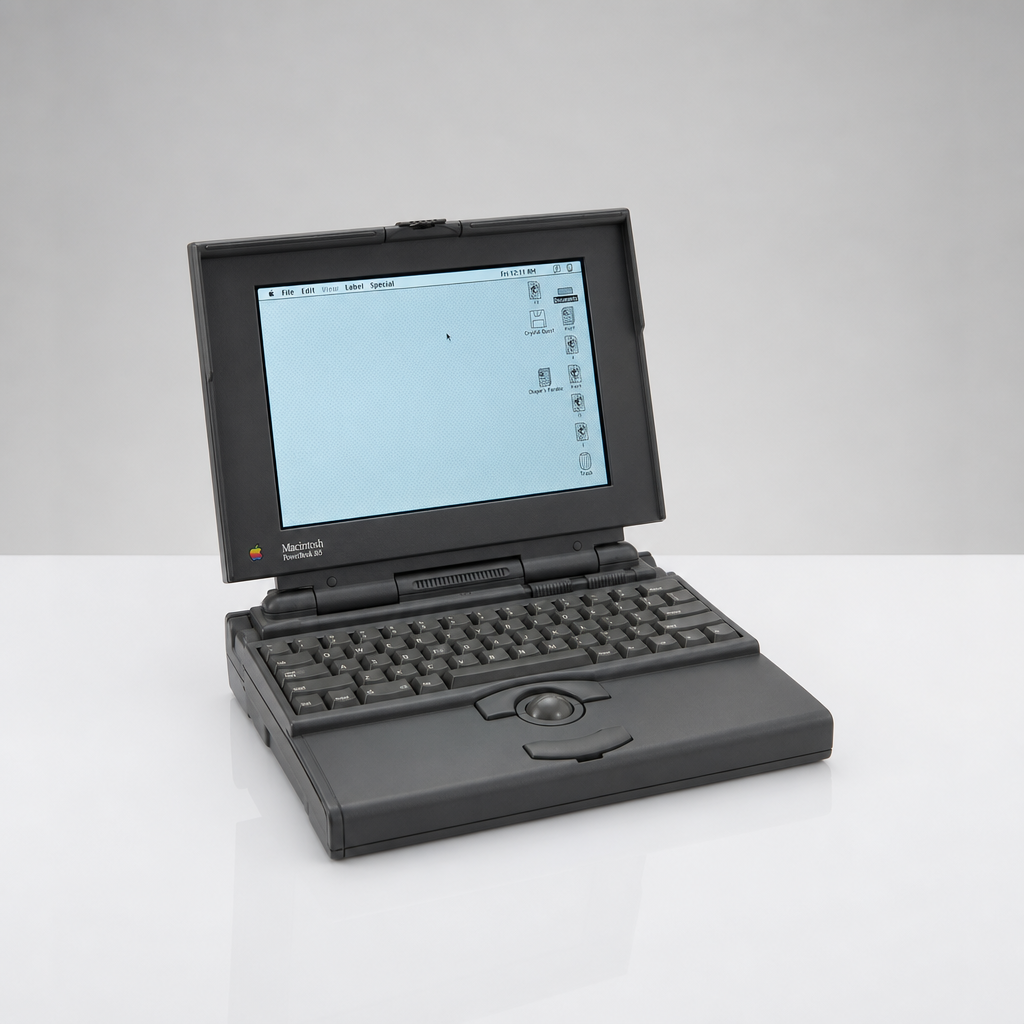
PowerBook 165
UncommonApple • 1993
The working-class PowerBook. 33 MHz 68030, passive-matrix grayscale screen, and the kind of hard-wearing plastics that still feel tight thirty years later. Apple sold these by the truckload to writers, students, and anyone who needed a Mac on a plane. Found at Goodwill — exactly where so many of these ended their careers.
Blackbird and the Mid-90s Lineup
The Narrative
The PowerBook 500 series was the first laptop that felt designed instead of assembled. Blackbird introduced the trackpad, stereo speakers, and the silhouette the line would keep for a decade. Its descendants — the budget 190 and the consumer 1400 — inherited the DNA and carried the PowerBook into the PowerPC era with the first built-in CD-ROM and the last gasp of the 68k chip.
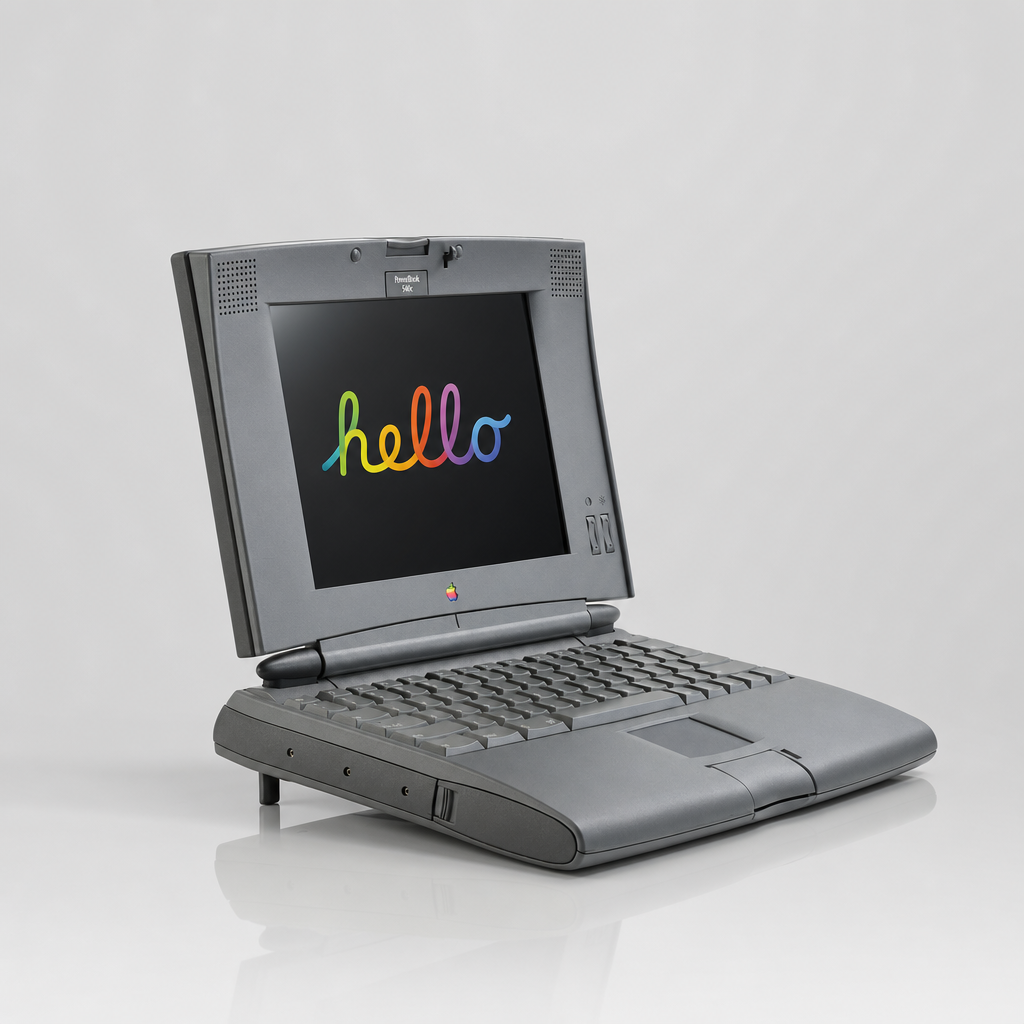
PowerBook 540c
RareApple • 1994
The flagship. 33 MHz 68040, active-matrix color, and — in this specimen — the rare PowerPC upgrade card that let Blackbird live a second life in the RISC era. This is the PowerBook that set the template.
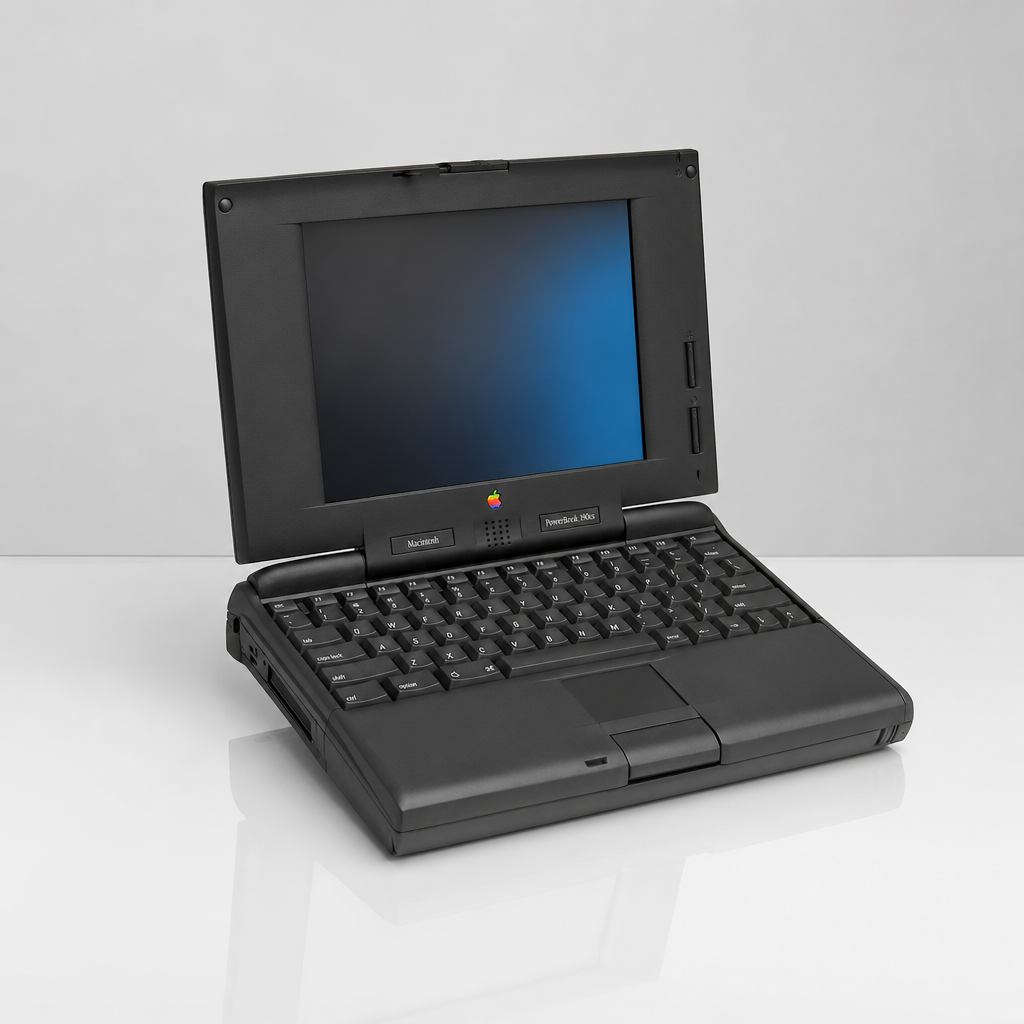
PowerBook 190cs
UncommonApple • 1995
The last 68k PowerBook. A 33 MHz 68LC040, a dual-scan color screen, and the same case language as the 5300 — which shared a factory and a catalog page. The 190 quietly closed out the Motorola 68000 line at Apple in 1995.
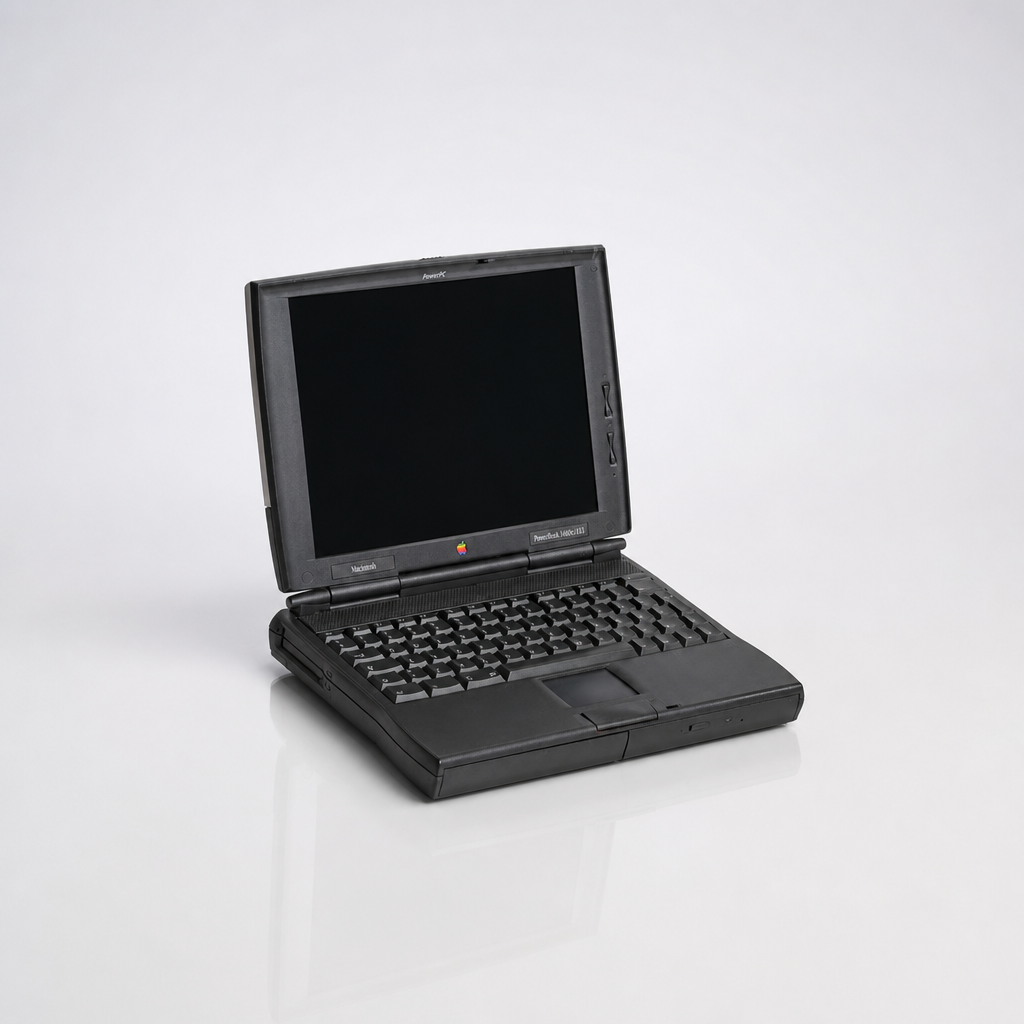
PowerBook 1400c
UncommonApple • 1996
The first consumer PowerPC PowerBook, and the first PowerBook with a built-in CD-ROM. A 603e at 117–166 MHz under a customizable 'BookCover' lid — you could slide artwork behind a transparent panel on the outside. The 1400 was where the mainstream laptop finally caught up to everything else on your desk.
Color Returns
By 1999 Apple was back. The iBook G3 clamshell was Jony Ive's laptop answer to the iMac — a translucent, toy-like object that ignored every laptop convention of the 1990s and sold by the millions to students, teachers, and anyone tired of beige. A few years later the white iBook G4 sanded off the edges and became the quietly perfect consumer Mac.
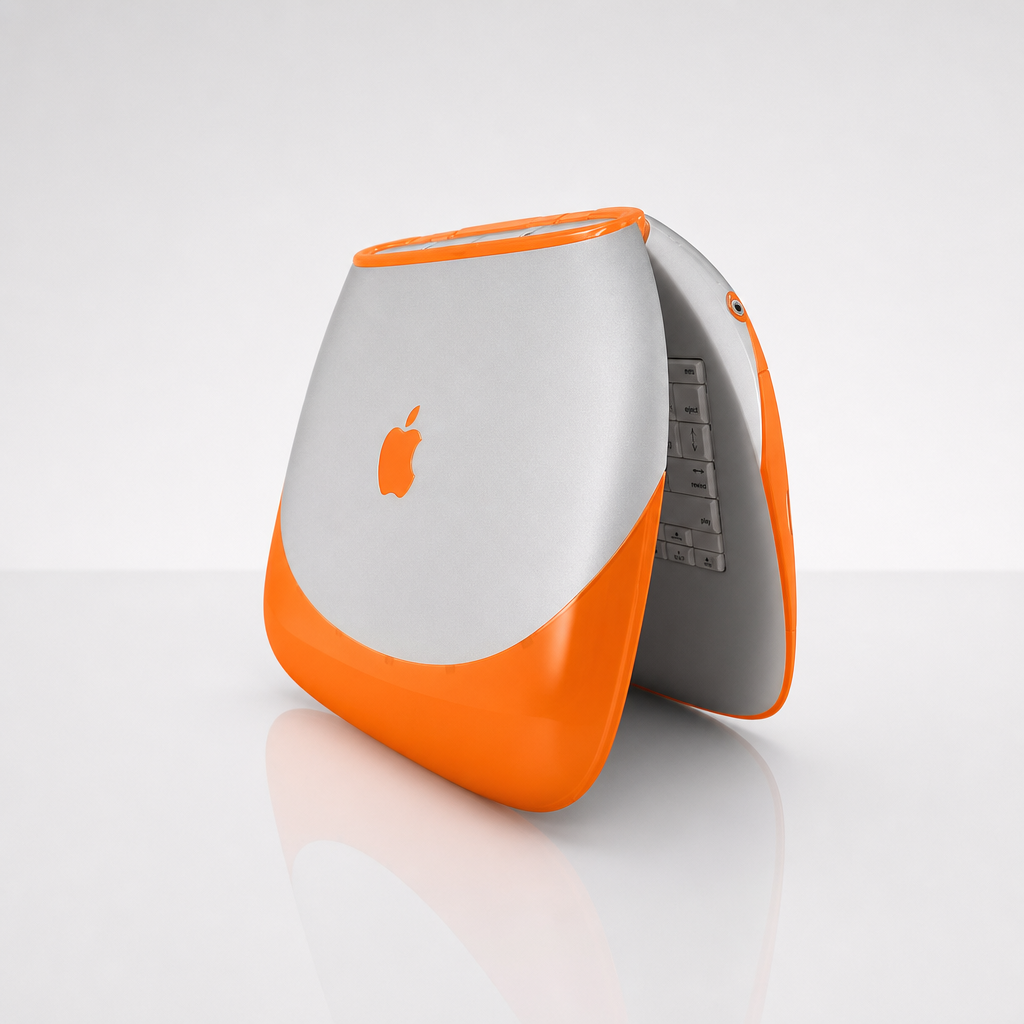
iBook G3
UncommonApple • 1999
Tangerine. A 300 MHz G3, a handle built into the hinge, and polycarbonate shells in flavors Apple was still willing to name after fruit. The clamshell was deliberately unlaptop-looking — and that was the point.
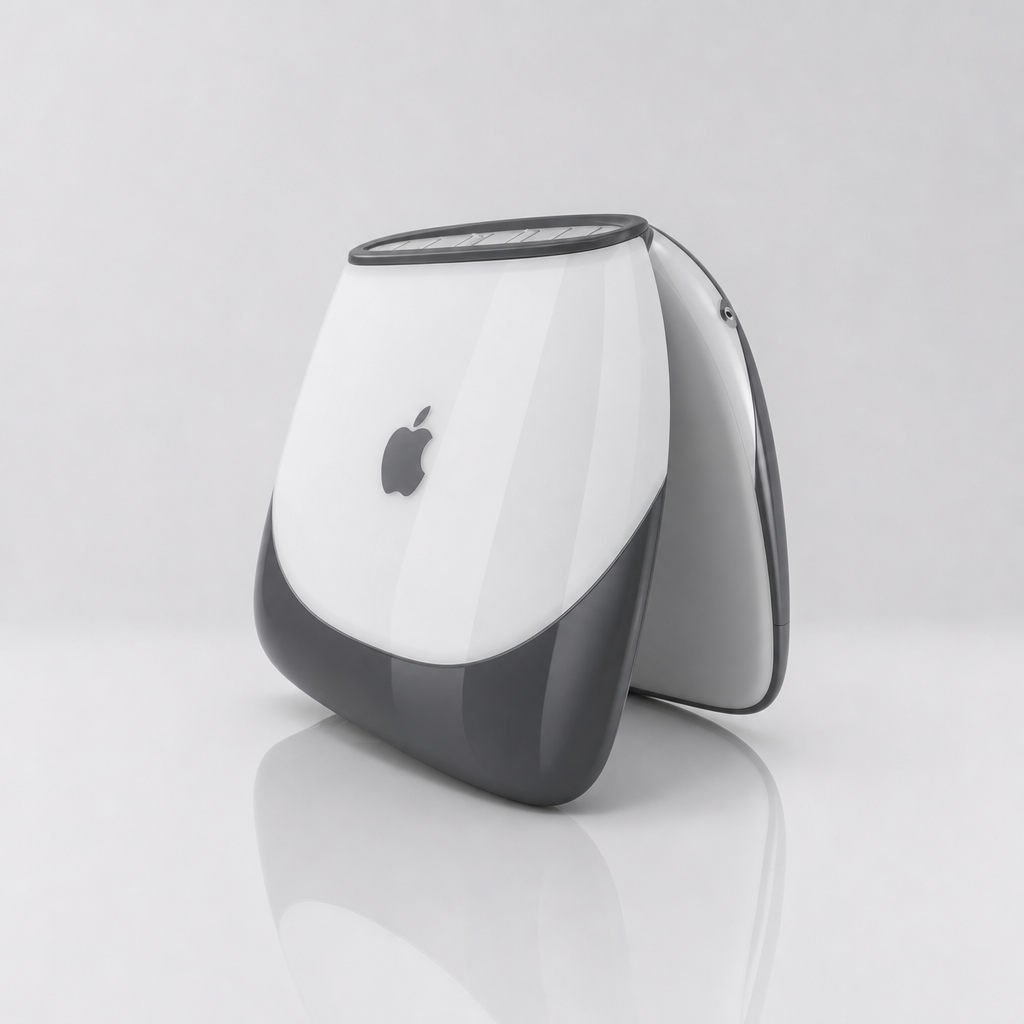
iBook G3 SE
RareApple • 2000
The grown-up. Apple added Graphite to the Special Edition line as the "serious" option — a muted gray shell aimed at the users who wanted the iBook's hardware without the iBook's personality. 466 MHz G3, 320 MB RAM ceiling, and the quiet implication that not every Mac buyer wanted to be seen carrying a fruit.
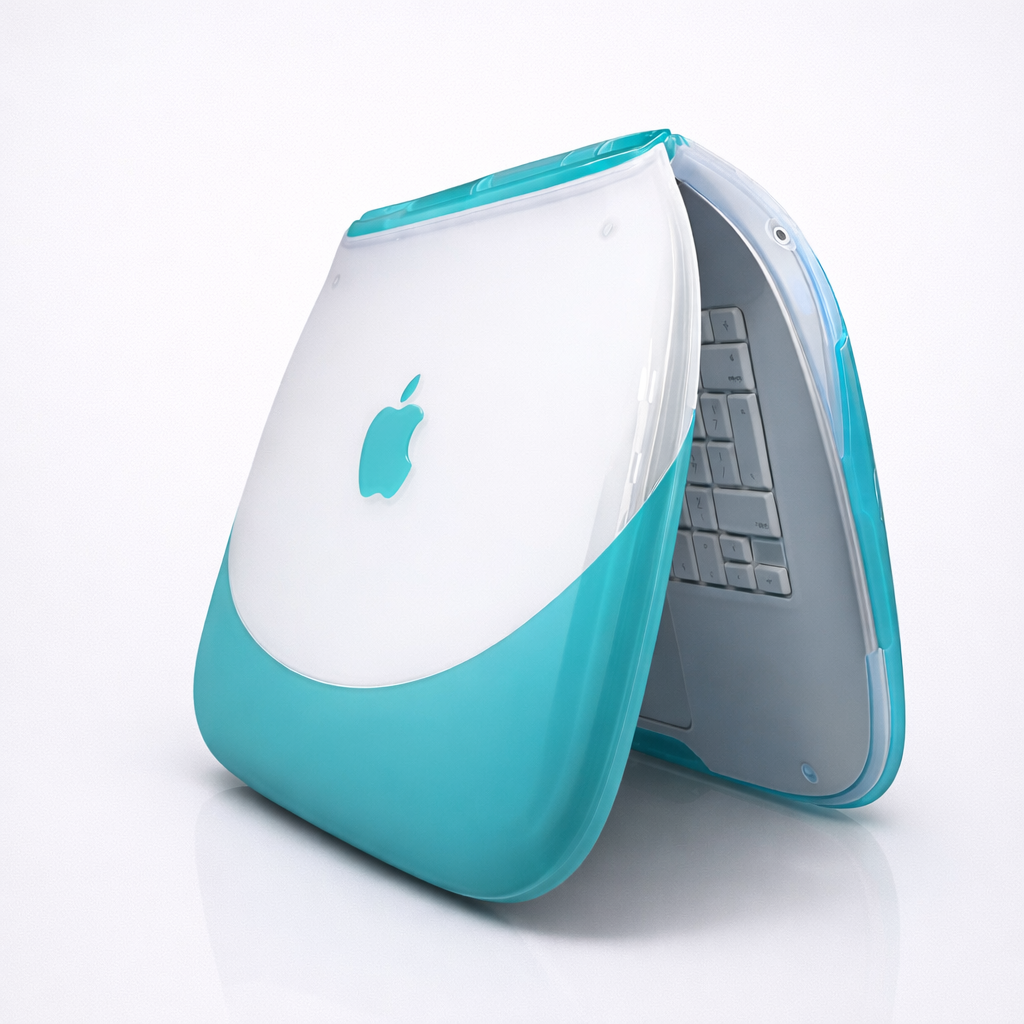
iBook G3
UncommonApple • 1999
One of the two launch colors, alongside Tangerine. Apple's marketing showed them in pairs — the visual shorthand for "there is no beige Mac anymore." The blue shell photographed better than any laptop Apple had ever shipped, and half the press coverage of the iBook was just pictures of the case.
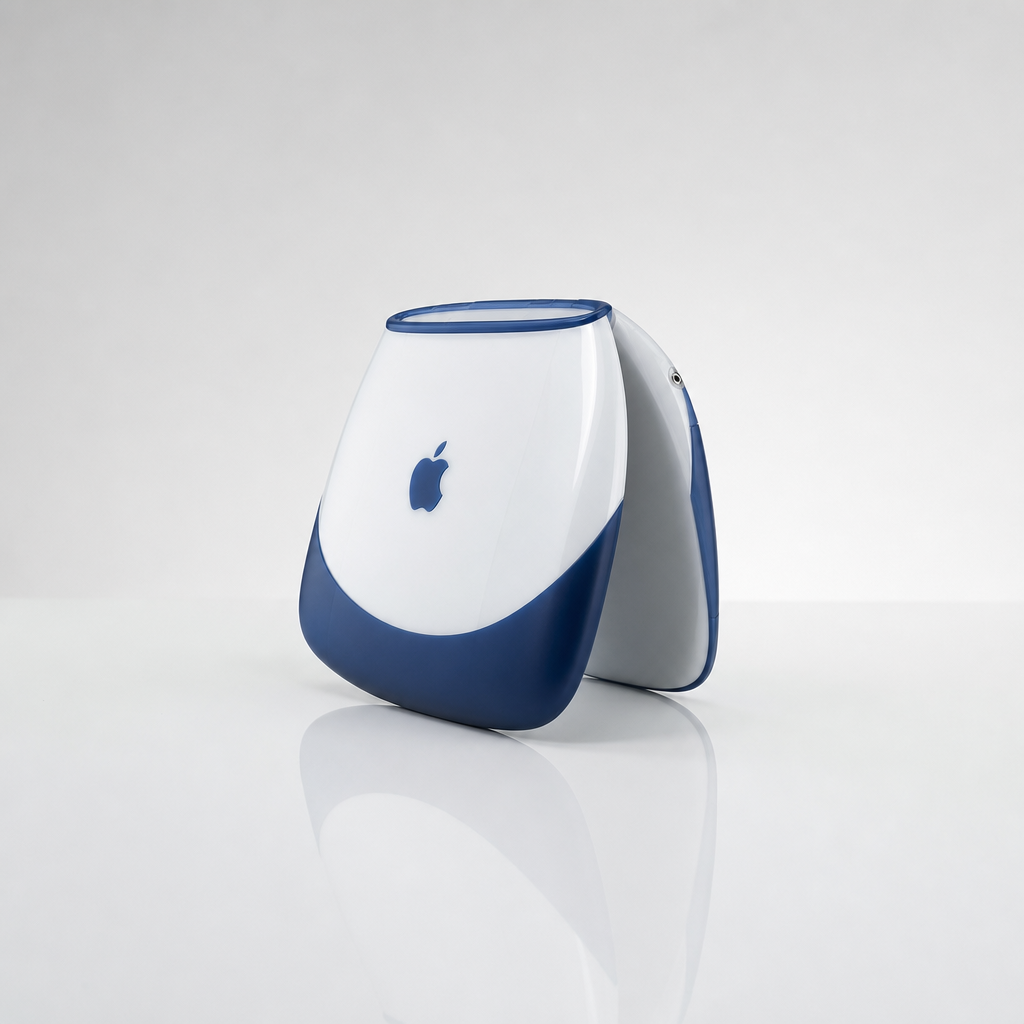
iBook G3
UncommonApple • 2000
Indigo replaced Blueberry in the second-generation refresh. Darker, richer, a little more grown-up — Apple had figured out that pastels photographed like toys and jewel tones photographed like products. A 366 MHz G3, FireWire, and a case that finally looked like it belonged on an adult's desk.
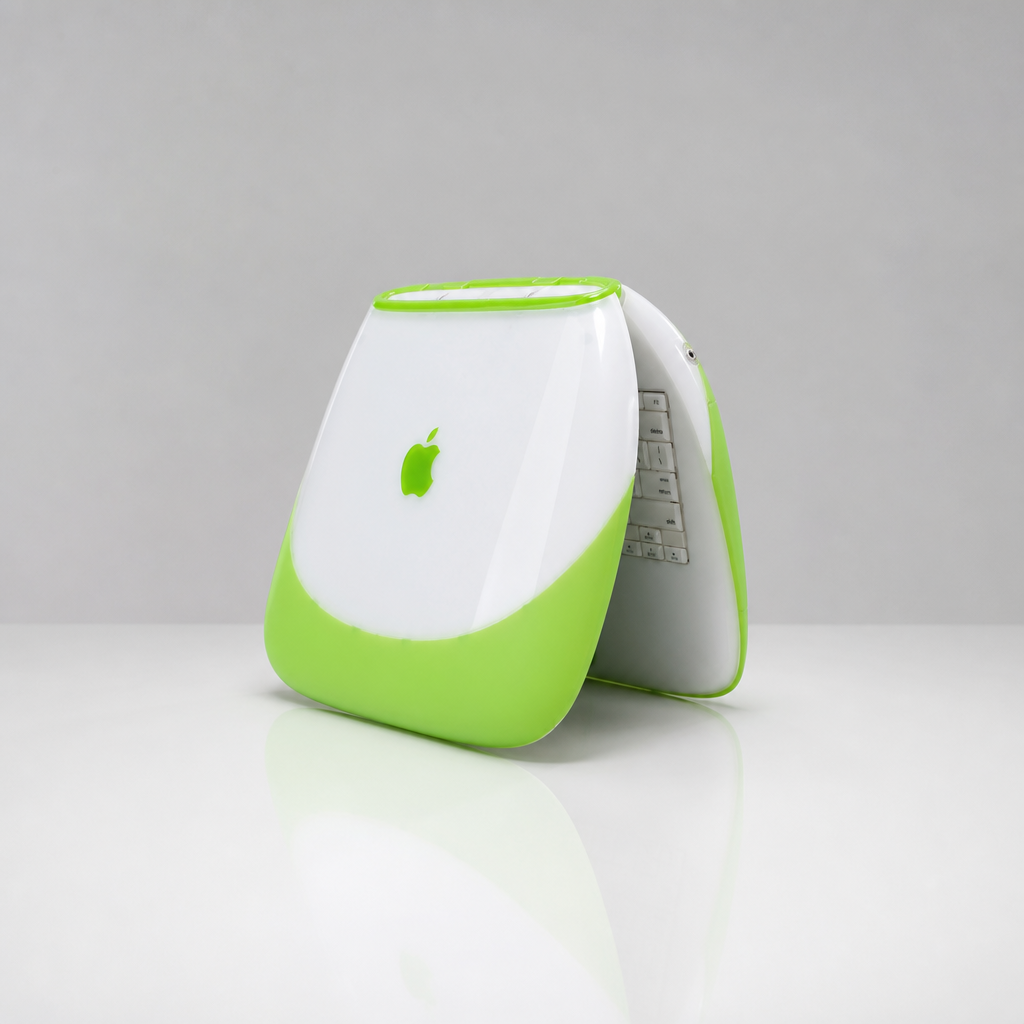
iBook G3 SE
Very RareApple • 2000
Lime Special Edition. The iBook's second generation bumped the G3 to 466 MHz and added FireWire. The color palette went deeper and more saturated — Graphite, Indigo, Key Lime — closing out the clamshell era in style.
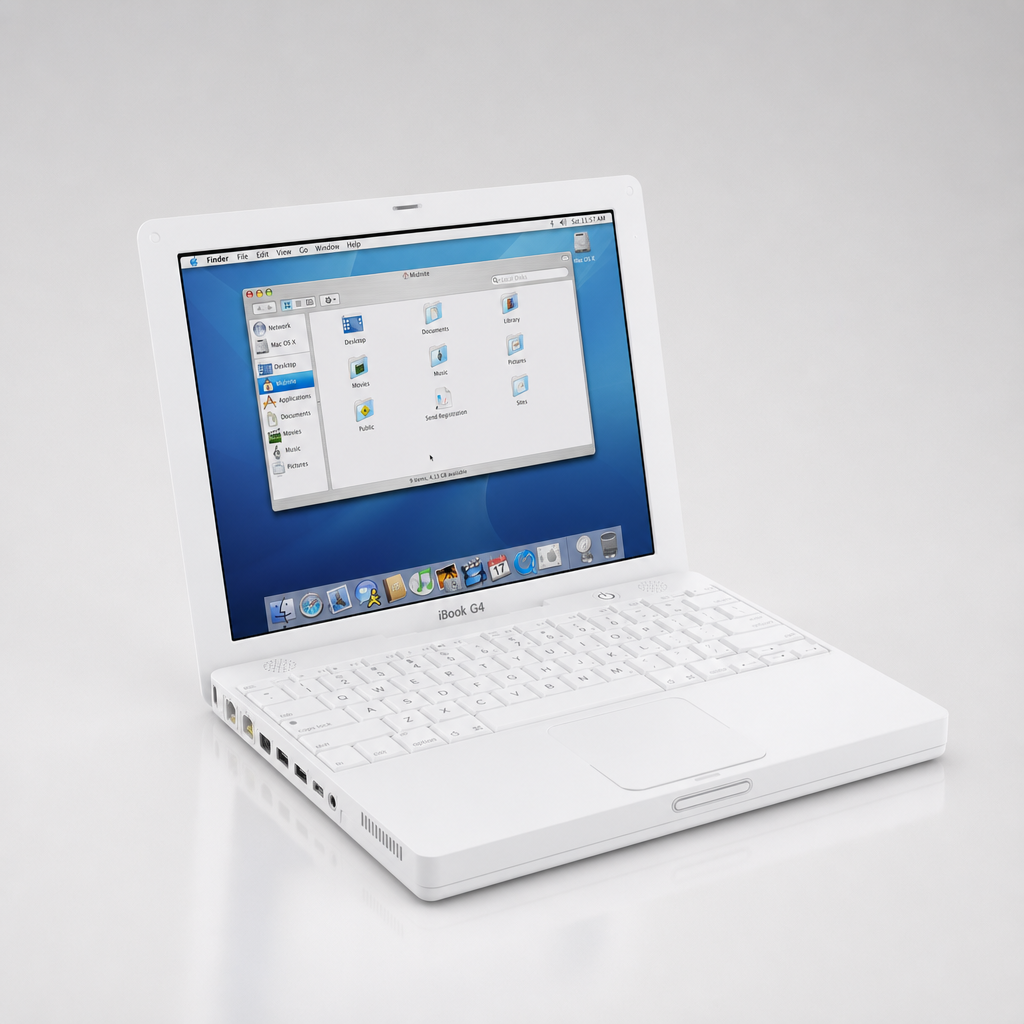
iBook G4
CommonApple • 2003
The white iBook G4. All the clamshell's DNA, none of the clamshell's shape. A sober white rectangle that quietly defined the Apple consumer laptop until the MacBook took over in 2006.
From Titanium to Aluminum
The Narrative
In 2001 Apple traded plastic for metal and never looked back. The Titanium PowerBook G4 was the first Apple laptop that felt like a piece of industrial equipment — 1" thin, a 15" widescreen display, and a paint-over-titanium shell that scratched if you looked at it wrong. The Aluminum PowerBooks that followed solved the paint problem, expanded the lineup to 12/15/17, and set the material language that still defines the MacBook Pro today.
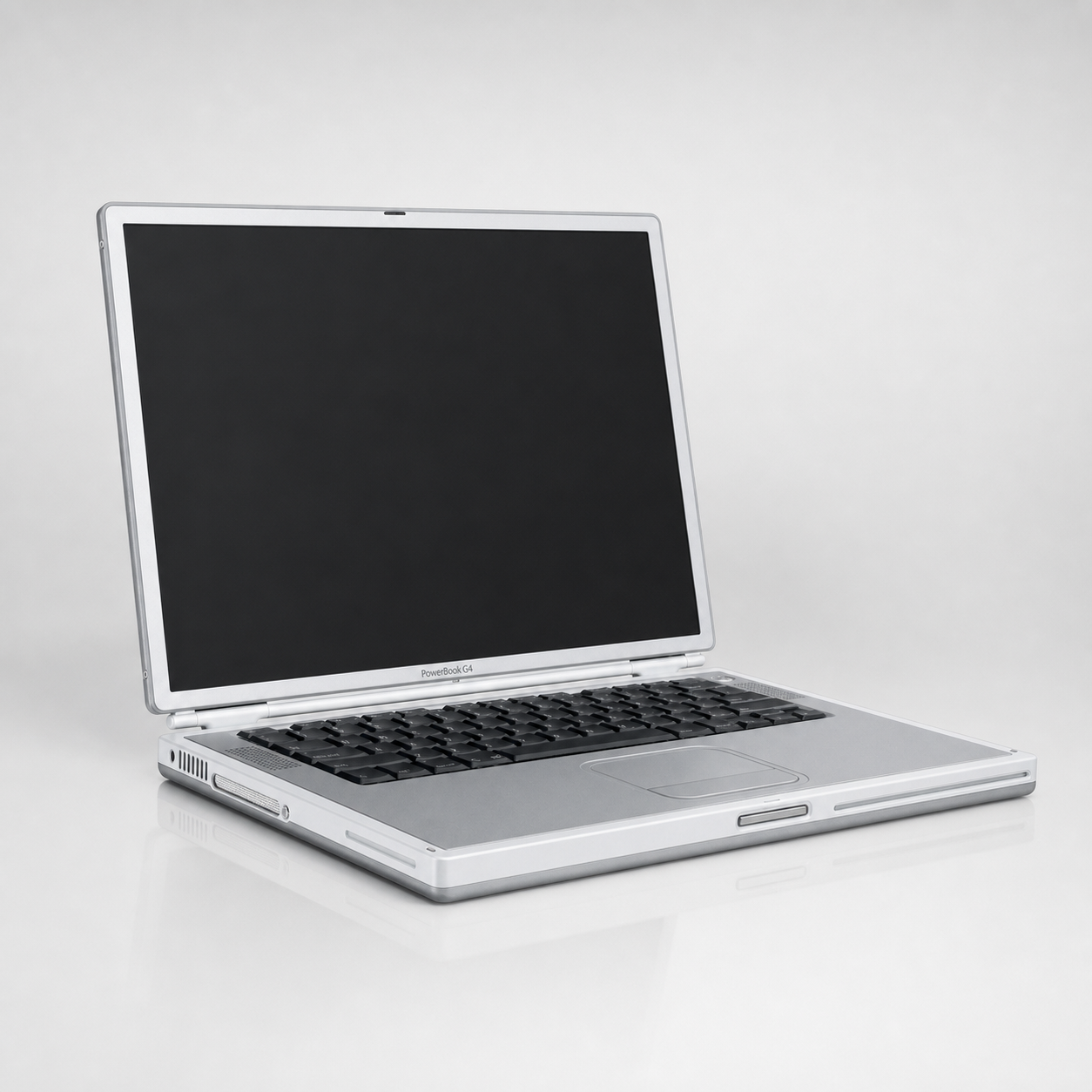
PowerBook G4 Titanium
UncommonApple • 2002
Titanium, DVI revision. 15.2" widescreen at 1152×768, a G4 at 667 MHz or faster, and a palm rest that's still shockingly thin. Notorious for flaking paint and bent lids — but when it came out, nothing else in the industry looked like it.
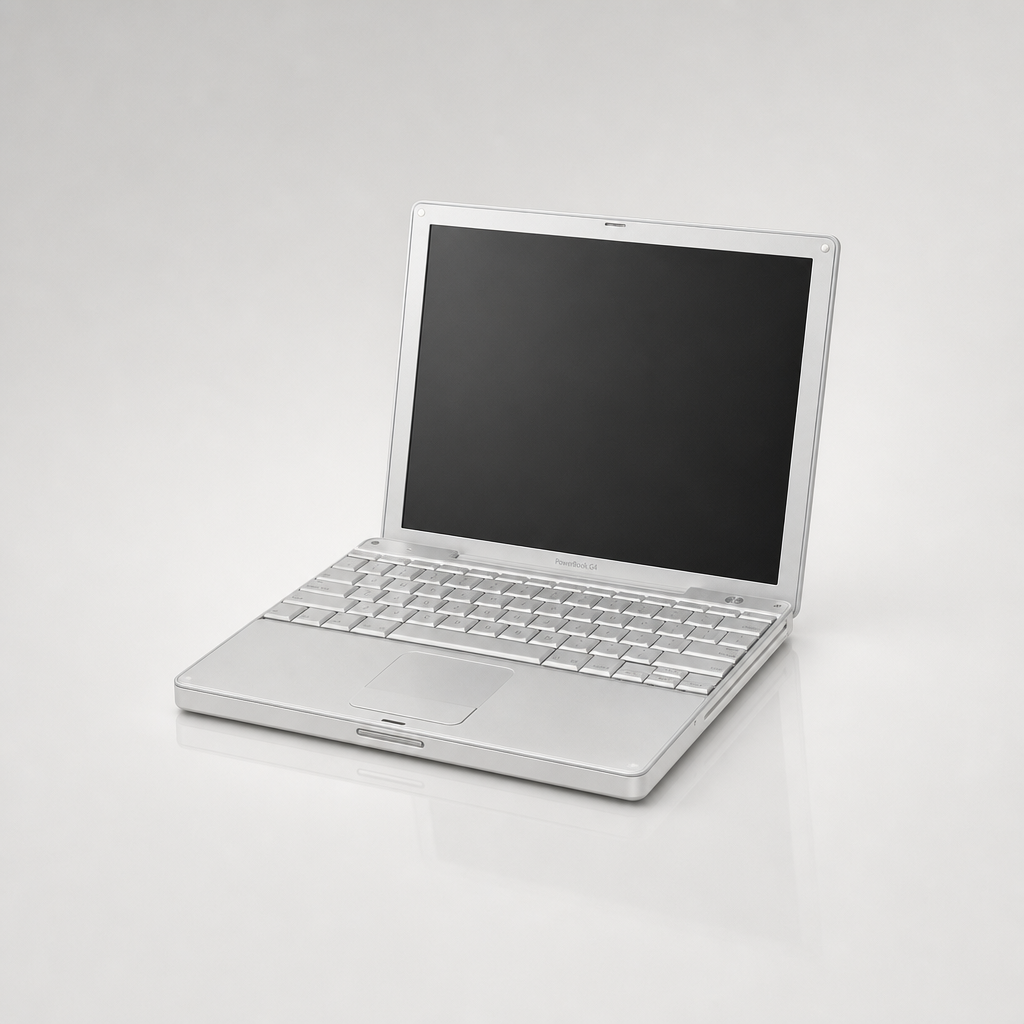
PowerBook G4
UncommonApple • 2005
Aluminum, 12" — the subnotebook that Apple never officially called a subnotebook. 1.5 GHz G4, backlit keyboard, and the densest packaging Apple had ever attempted. The template that the 11" MacBook Air would pick up five years later.
The Unibody Era
In 2008 Apple showed a block of aluminum on stage and then the laptop it had been machined from. The unibody MacBook wasn't just a chassis change — it was a manufacturing declaration. One part, no fasteners, no flex. Every MacBook shipped since is a direct descendant. And then the MacBook Air arrived to show what you could do once the laptop had nothing left to remove.
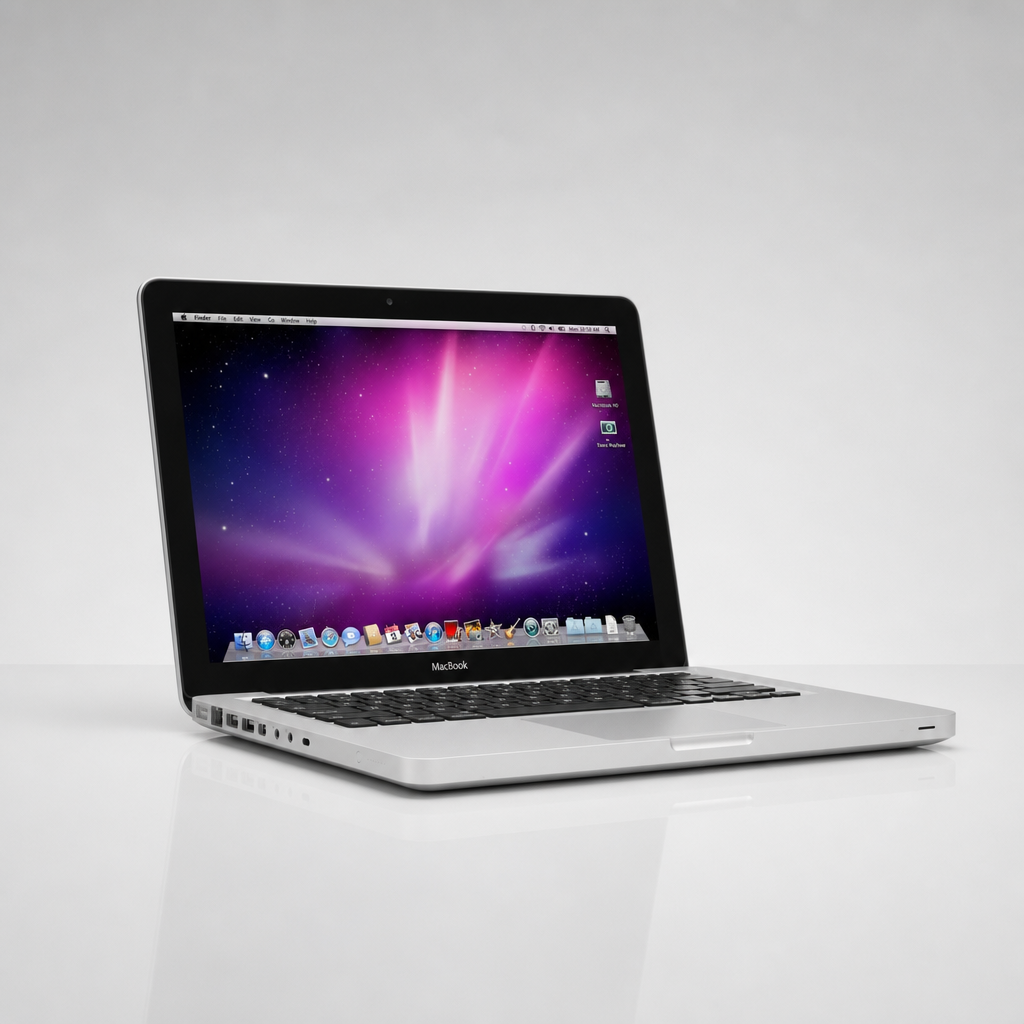
MacBook
CommonApple • 2008
Late-2008 unibody MacBook. The first consumer laptop milled from a single block of 6000-series aluminum. Glass trackpad, LED backlight, and a rigidity that made every plastic laptop that came before feel like a rental car.
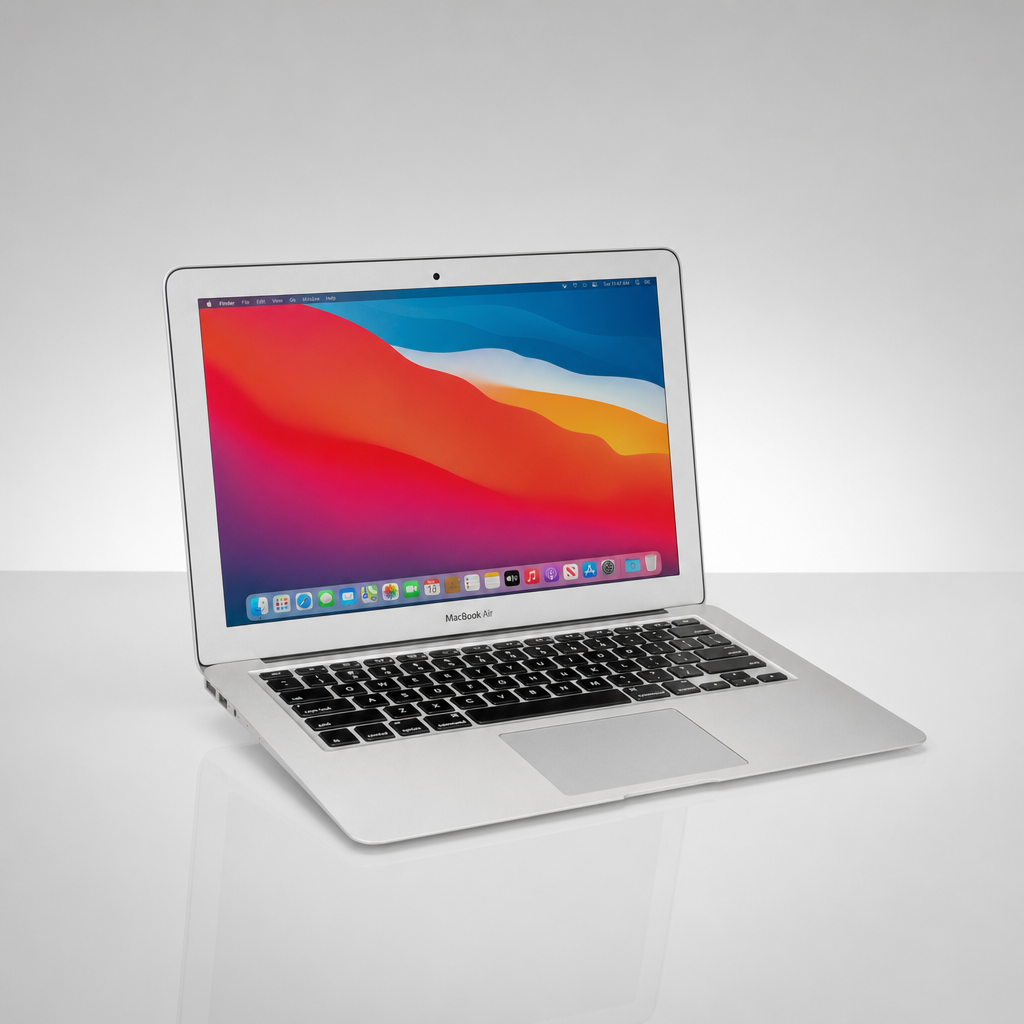
MacBook Air
CommonApple • 2012
MacBook Air, Mid-2012. The design that settled the argument — wedge profile, all-flash storage, all-day battery. The blueprint that the industry has been chasing ever since, and that Apple itself would keep shipping, largely unchanged, for seven more years.